
The Eagle Has Landed (1976 film)
1976 British World War II thriller directed by John Sturges, adapted from Jack Higgins's novel. An ensemble cast enacts a fictional German plot in wartime Britain; noted for its suspense and performances.
Overview
Released in 1976, The Eagle Has Landed is a British World War II adventure thriller directed by John Sturges and adapted from the 1975 novel by Jack Higgins. The film presents a tightly plotted fictional operation set during the later years of the war, and it is remembered for an international ensemble cast and a tone that mixes military action with suspense.
Image gallery
1 Image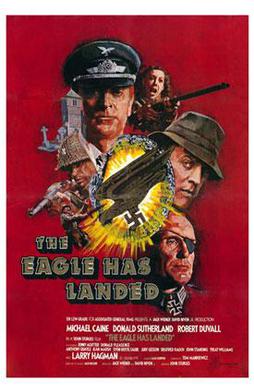
Plot and themes
The story centers on a clandestine German mission to infiltrate wartime England and carry out a high-profile political objective. Rather than depicting actual historical events, the plot uses a what-if premise to explore themes of loyalty, moral ambiguity in wartime, and the practical tension between orders and conscience. The screenplay emphasizes suspense, clandestine planning and the clash between military discipline and unpredictable local resistance.
Cast and production
The film features a star-studded cast, including Michael Caine, Donald Sutherland, Robert Duvall, Treat Williams, Larry Hagman, Jenny Agutter, Donald Pleasence, Jean Marsh and Anthony Quayle. It was produced for wide release and distributed by Columbia Pictures. The ensemble nature of the cast lets the film balance individual character moments with a plotting focus on the mission as a whole.
Historical context and accuracy
Although set against the authentic backdrop of World War II, the central kidnapping scheme is a fictional device. The film is part of a long tradition of wartime thrillers that imagine covert operations and moral dilemmas, and it should be read as entertainment rather than documentary. Its attention to period detail—uniforms, settings and military procedure—serves dramatic credibility rather than strict historical reportage.
Reception and legacy
Upon release the picture drew attention for its brisk pacing and the acting of its leads. Critics and audiences have since regarded it as a solid example of the wartime adventure genre: effective at building tension and showcasing a strong ensemble. The novel-to-film adaptation helped prolong interest in Jack Higgins's story and the movie remains a frequent reference point for later films and fiction that explore plausible alternate wartime plots.
- Source novel: Jack Higgins
- Notable actors: Michael Caine, Donald Sutherland, Robert Duvall
- Distributor: Columbia Pictures
Author
AlegsaOnline.com The Eagle Has Landed (1976 film) Leandro Alegsa
URL: https://en.alegsaonline.com/art/146601