
The Dirty Dozen (1967) — film summary, cast, production and legacy
Overview of the 1967 war film The Dirty Dozen: premise, principal cast, production background, reception, and cultural influence.
The Dirty Dozen is a 1967 American World War II film directed by Robert Aldrich. Built around a high-risk commando mission, it pairs violent action with dark humor and a roster of strong character actors. The screenplay was adapted from the 1965 novel by E. M. Nathanson and the finished picture helped define a popular late‑1960s strain of gritty, antihero war cinema.
Image gallery
3 Images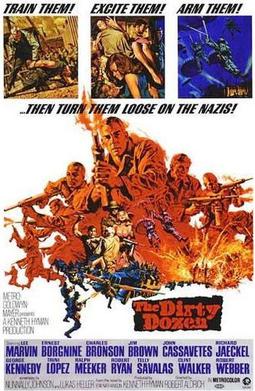


Plot and structure
The story follows a gruff major who is assigned to train and lead a group of twelve convicted prisoners on a suicide-style raid against a high-value target behind enemy lines. The film balances group dynamics and individual backstories with large-scale action sequences. Rather than a conventional hero arc, the narrative emphasizes teamwork, moral ambiguity, and the expendability of soldiers in wartime storytelling.
Principal cast
- Lee Marvin as the unit leader
- Ernest Borgnine
- Charles Bronson
- Jim Brown
- John Cassavetes
- George Kennedy
- Robert Ryan
- Telly Savalas
- Robert Webber
- Donald Sutherland
- Trini Lopez
As an ensemble piece the film foregrounds individual quirks and conflict within the team while keeping the action-driven plot moving toward a climactic assault. Production combined location shooting with studio work and relied on tight editing and a driving score to sustain tension.
On release, the picture drew both commercial success and controversy. Critics praised the energetic direction and performances, particularly the chemistry among supporting players, while some commentators objected to the film's moral tone and depiction of violence. Over time it became influential: its formula of a ragged team undertaking a suicidal mission has been echoed in later war and heist films.
Notable facts include the movie's impact on ensemble casting and its role in several actors' careers. The film inspired remakes, television adaptations and frequent reference in popular culture. For further information see contemporary accounts, biographies of the director and performers, and the original novel; these resources provide deeper context for the film's creation and legacy. More on the film and archival material can illuminate shifts in war cinema that the picture helped to accelerate.
Author
AlegsaOnline.com The Dirty Dozen (1967) — film summary, cast, production and legacy Leandro Alegsa
URL: https://en.alegsaonline.com/art/146596