
That Lady in Ermine: 1948 musical film directed by Ernst Lubitsch
A 1948 American musical film directed by Ernst Lubitsch, adapted from the 1919 operetta Die Frau im Hermelin. Stars Betty Grable, Douglas Fairbanks Jr., and Cesar Romero; released by 20th Century Fox.
Overview
That Lady in Ermine is a 1948 American musical film associated with director Ernst Lubitsch and the studio 20th Century Fox. Presented as a romantic musical comedy, it adapts material from an early 20th‑century operetta and showcases the period spectacle and lighthearted tone typical of Hollywood musicals of the era.
Image gallery
1 Image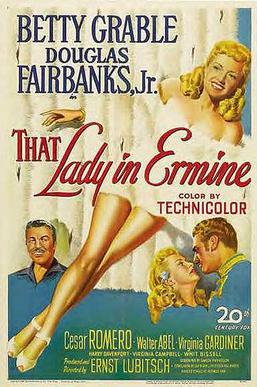
Source and screenplay
The film's screenplay was written by Samson Raphaelson and is based on the 1919 operetta Die Frau im Hermelin by Rudolph Schanzer and Ernst Welisch. The move from stage operetta to screen musical required condensing and reshaping plot elements while adding song and dance numbers that emphasize star performances and cinematic visual design.
Cast and production
The picture features principal performances by Betty Grable, Douglas Fairbanks Jr., and Cesar Romero. These stars were cast to balance singing, dancing and romantic-comedic acting. The film was produced and distributed by 20th Century Fox and is often noted as the last feature directed by Ernst Lubitsch.
Plot elements and style
Rather than a modern urban setting, the story leans on a historical or pseudo‑courtly backdrop, using mistaken identity and romantic entanglements as the principal sources of comedy. The cinematic style blends musical routines with lavish costumes and sets, aiming to recreate the operetta’s elegance while accommodating Hollywood pacing and star turns.
Reception and legacy
On release, the film attracted attention because of its high-profile cast and Lubitsch’s involvement. Critics and historians place it among mid‑20th century studio musicals that adapted European stage works for American audiences. Today it is of interest to students of Lubitsch’s later career, classic Hollywood musicals, and adaptations of operetta to film.
Notable facts
- The screenplay credits reflect the transition from Viennese operetta to Hollywood musical comedy.
- Performances were tailored to the strengths of established studio stars, balancing choreography and comic timing.
- The film is often discussed in survey treatments of Lubitsch’s work and in histories of studio-era musicals.
Author
AlegsaOnline.com That Lady in Ermine: 1948 musical film directed by Ernst Lubitsch Leandro Alegsa
URL: https://en.alegsaonline.com/art/146551