
Stabbing: penetrating injuries from pointed objects
A stabbing is a penetrating wound caused by a sharp or pointed object. This article explains definition, wound types, medical care, forensic issues, history and prevention.
A stabbing is a penetrating injury produced when a sharp or pointed object pierces bodily tissues at close range. Intentional stabbings are committed by attackers such as an assassin or a murderer, but many events are accidental or occur during altercations. The term covers a wide range of situations from a shallow puncture to deep injuries that damage internal organs and major blood vessels.
Image gallery
3 Images
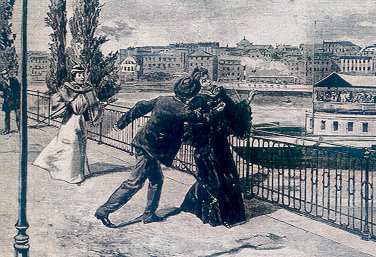

Characteristics
Stab wounds differ from other sharp-force injuries (like cuts or lacerations) because they result from a concentrated force over a small area, producing a narrow channel into the body. Common implements include kitchen knives, pocket knives, screwdrivers, ice picks and improvised metal objects. Severity depends on depth, angle, force and location: a small puncture to the chest or abdomen can be life-threatening if it injures the heart, lungs or major vessels.
- Puncture wounds: deep, narrow wounds with limited external bleeding but significant internal risk.
- Perforating wounds: entry and exit present when the object passes through.
- Impaled objects: weapon remains in place, complicating bleeding control and transport.
First aid and medical care
Immediate response focuses on stopping life-threatening bleeding and ensuring airway, breathing and circulation. Basic measures include applying direct pressure, using dressings and tourniquets for severe limb bleeding, and avoiding removal of an impaled object except by trained clinicians. Emergency services perform assessment with imaging (X-ray, CT) and may proceed to surgery for repair, control of hemorrhage, or removal under controlled conditions. Antibiotics and tetanus prophylaxis are common, and psychological support can be necessary after assault.
Forensic and legal aspects
In forensic practice, examiners document wound size, shape, depth and direction to infer the type of weapon and the relative positions of assailant and victim. Defensive wounds on hands or forearms indicate a victim attempted to block an attack. Crime-scene evidence, bloodstain patterns and weapon markings on bone or tissue can be critical in legal proceedings.
Historically, knives and similar blades have been used in both warfare and targeted killings; modern public-health concerns focus on interpersonal violence in urban settings, prisons and gangs where inexpensive blades are readily available. Prevention strategies combine law enforcement, community programs, safe storage campaigns and trauma-system readiness to reduce mortality and long-term disability associated with stabbing injuries.
Because outcomes vary widely, prompt medical evaluation after any penetrating injury is essential. For further reading on clinical management and legal considerations, consult trauma-care guidelines and forensic texts or follow links from trusted medical and legal resources: assault resources and criminal investigation guides.
Author
AlegsaOnline.com Stabbing: penetrating injuries from pointed objects Leandro Alegsa
URL: https://en.alegsaonline.com/art/146081