
Show Me the Meaning of Being Lonely — Backstreet Boys song
A detailed encyclopedia-style article on the Backstreet Boys' 1999 ballad “Show Me the Meaning of Being Lonely”: themes, musical traits, release and chart performance, video, live shows and legacy.
Overview
"Show Me the Meaning of Being Lonely" is a melancholic pop ballad recorded by the American vocal group the Backstreet Boys. Issued late in 1999 as a single from their album Millennium, the song explores themes of loss, longing and emotional emptiness after the departure or death of a loved one. Its slow tempo, layered harmonies and introspective lyrics helped establish it as one of the group's most recognizable ballads.
Image gallery
1 Image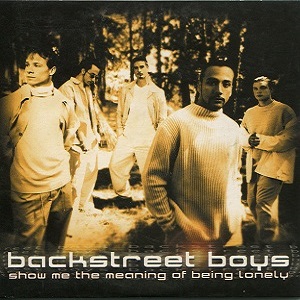
Musical characteristics and lyrical themes
The track is stylistically rooted in mainstream pop production and adopts elements typical of a contemporary ballad: a restrained arrangement, prominent vocal lines, and a focus on emotional expression rather than dance rhythms. Instrumentation commonly heard in recordings and live renditions includes piano, string pads or orchestral accents, and subtle percussion that supports the melody without overshadowing the singing. Lyrically, the song frames loneliness as a searching question — the narrator asks what it means to live without someone important and how to cope with an undefined ache.
Release, chart performance and formats
Released as a single on December 21, 1999, the song became a commercial success in the United States and elsewhere. On the U.S. Billboard Hot 100 it reached the top ten, peaking at number six, and it performed strongly on adult-oriented radio formats, climbing to number two on the Hot Adult Contemporary chart. The single was distributed in multiple formats typical of the period, including CD single and radio edit versions used for promotion.
Music video, live performances and public reception
The accompanying music video interpreted the song’s themes through visual storytelling and helped broaden its exposure on music television channels. The band included the song regularly in concert set lists during tours that followed the Millennium era, using it as an opportunity to showcase vocal harmonies and slower-tempo dynamics amid more uptempo material. Critics and fans generally praised the song for its emotive delivery and its role in demonstrating the group’s capacity for balladry alongside their pop hits.
Legacy and notable facts
- The song remains associated with the Backstreet Boys’ late-1990s peak and is often cited among their signature slow-tempo tracks.
- Its chart success on the Billboard Hot 100 and the Hot Adult Contemporary chart reflected the group’s crossover appeal to both teen and adult listeners.
- As a representative of late-1990s pop ballad production, it illustrates the era’s emphasis on vocal harmony and polished studio arrangements.
For more on the group and the album era that produced this track, see entries about the Backstreet Boys and the broader pop landscape of the late 1990s; further details can be found via resources linked to the terms Backstreet Boys and the Billboard Hot 100.
Author
AlegsaOnline.com Show Me the Meaning of Being Lonely — Backstreet Boys song Leandro Alegsa
URL: https://en.alegsaonline.com/art/145754