
Ruairí Ó Brádaigh: Irish republican leader and traditionalist (1932–2013)
Profile of Ruairí Ó Brádaigh, his life, leadership roles in the Irish republican movement, political positions including abstentionism, and his role in the formation of Republican Sinn Féin.
Ruairí Ó Brádaigh (2 October 1932 – 5 June 2013) was a prominent figure in Irish republicanism during the second half of the 20th century. He combined organisational roles in the Irish Republican Army with long-term political leadership, and is best known for his commitment to traditional abstentionist republican principles and for leading the anti-revisionist wing of the movement that formed Republican Sinn Féin. His public life spanned decades of political dispute over strategy, legitimacy and the use of force in pursuit of Irish unity.
Image gallery
2 Images
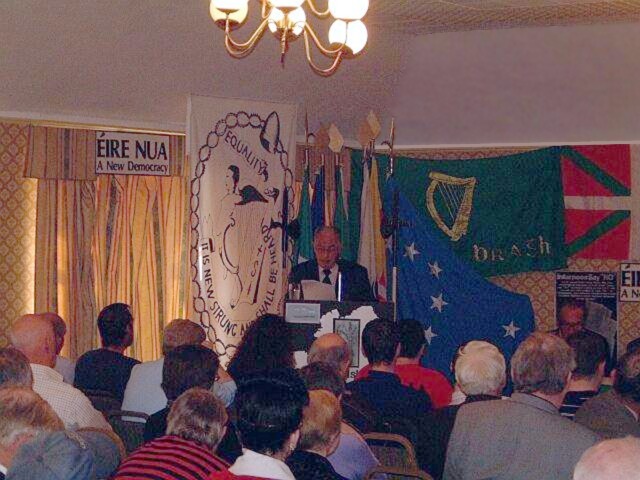
Early life and education
Ó Brádaigh was born in County Longford and grew up in Dublin. He received his schooling at St. Mel's College and later attended University College Dublin, where he became involved in republican circles that shaped his lifelong political outlook. His formative years coincided with the conservative, anti-Treaty strain of Irish republicanism that rejected partition of the island and insisted on the legitimacy of continuing the struggle for full national independence.
Activism and leadership roles
Over several decades Ó Brádaigh held both military and political offices within the republican movement. He served as a leader within the Irish Republican Army, including two terms as Chief of Staff in the late 1950s and early 1960s, a period that overlapped with the end stages of the IRA’s Border Campaign. He later moved into party politics, becoming president of Sinn Féin in 1970 and leading the organisation through a turbulent period marked by the escalating conflict in Northern Ireland.
His name is associated with the factional disputes that have shaped modern Irish republicanism. In the mid-1980s, when Sinn Féin voted to alter its long-standing policy of abstentionism from parliamentary institutions in the Republic of Ireland, Ó Brádaigh opposed that change. He became a central figure in the breakaway group that refused the policy shift and subsequently helped establish Republican Sinn Féin, serving as its president from its formation into the early 21st century.
Political views and controversies
Ó Brádaigh was widely viewed as a traditionalist who insisted on the legitimacy of the pre-Treaty republican constitutional position, the unconditional rejection of partition, and the principle that republicans should not recognise or participate in the institutions of the Irish state as constituted. He argued that electoral participation that implied recognition of partition compromised core republican aims. These positions made him a controversial figure: admired by supporters for consistency and principle, criticized by others for opposing engagement that some believed would advance republican aims by peaceful and political means.
Legacy and later life
In later years Ó Brádaigh remained active as a voice for traditional republicanism, though he withdrew from front-line leadership in the 2000s. He was married to Patsy O'Connor. He died after a short illness in County Roscommon in June 2013 at the age of 80. Histories of the period treat him as a representative of the strand of Irish republicanism that prioritised ideological continuity and refusal to compromise on the principle of a united Ireland, and his life illustrates the tensions between armed struggle and electoral politics that have defined much of modern Irish history.
Summary of key roles
- Early activist in republican organisations and student republican circles.
- Chief of Staff of the Irish Republican Army during the late 1950s and early 1960s (IRA).
- President of Sinn Féin (1970–1983), leading through a formative period of the Troubles.
- Leading opponent of the 1986 policy change on abstentionism and president of Republican Sinn Féin after the split.
For concise reference on particular events, places connected to Ó Brádaigh’s life include his birthplace in Longford, his upbringing in Dublin, and his place of death in Roscommon. These anchors mark the personal geography of a figure whose public controversies remain part of discussions about republican strategy and memory.
Author
AlegsaOnline.com Ruairí Ó Brádaigh: Irish republican leader and traditionalist (1932–2013) Leandro Alegsa
URL: https://en.alegsaonline.com/art/145129