
Rhamnus (buckthorns): description, distribution, uses and ecology
Rhamnus, or buckthorns, is a genus of about 100–120 shrubs and small trees in the family Rhamnaceae, noted for thorny twigs, small flowers and berry-like fruit; some species are cultivated, others invasive.
Overview
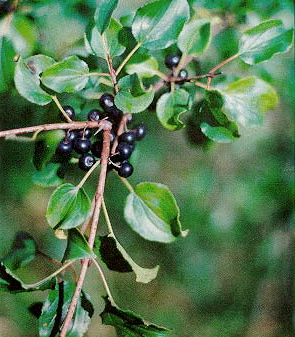
Rhamnus is a genus of flowering plants in the family Rhamnaceae, commonly called buckthorns. It comprises roughly 100–120 species of shrubs and small trees with a wide range of growth forms, from low, thorny bushes to multi-stemmed shrubs and small trees up to several metres tall. Many species bear sharp lateral spines or thornlike twigs, which inspired the common name. Flowers tend to be small and inconspicuous, and the fruit is typically a berry or drupe that often becomes dark-coloured at maturity.
Image gallery
3 Images

Description and identification
Leaves are simple and arranged alternately on the stems; they frequently have prominent veins and may be toothed or entire depending on the species. Flowers are generally radially symmetrical, with a small cup of petals and several stamens. Fruits are fleshy and contain a small number of hard seeds. Woody spines or hardened short branches occur on many species and are an important field character. Bark, leaf venation and fruit colour are also used to distinguish species and separate Rhamnus from related genera.
Distribution and habitat
Species of Rhamnus occur across temperate and subtropical regions of Europe, Asia, Africa and the Americas. They are found in a variety of habitats including coastal scrub, Mediterranean maquis, woodland edges, hedgerows and montane slopes. Several species tolerate a range of soils and light conditions, from open, sunny sites to shaded understories.
Taxonomy
The genus has a long taxonomic history. Some species historically placed in Rhamnus have been reassigned to closely related genera such as Frangula. Botanical treatments vary by region as taxonomists refine relationships within Rhamnaceae. Common and scientific names sometimes reflect historical uses, for example the association of certain species with cathartic (laxative) properties.
Uses and ecology
Several species have traditional or commercial uses. Bark from some taxa (commonly called cascara) has been used as a stimulant laxative, and other species have been used in folk remedies or for dyes. The fruits are eaten by birds and other wildlife, which disperse seeds; this bird-mediated dispersal has aided the spread of some species beyond their native ranges.
Notable species and management
- Rhamnus cathartica — common buckthorn; native to parts of Europe and Asia, introduced elsewhere and considered invasive in parts of North America where it forms dense thickets and alters native plant communities.
- Rhamnus alaternus — a Mediterranean shrub used ornamentally and in restoration plantings.
- Rhamnus purshiana (cascara) — historically harvested for its laxative bark.
Where species are invasive, management combines mechanical removal, monitoring and appropriate follow-up to reduce regrowth and seedling recruitment. Conservation efforts focus on protecting native Rhamnus populations and preventing the spread of non-native species into sensitive habitats.
Author
AlegsaOnline.com Rhamnus (buckthorns): description, distribution, uses and ecology Leandro Alegsa
URL: https://en.alegsaonline.com/art/144771