
Mr. Mom (1983 film)
1983 American comedy, directed by Stan Dragoti and written by John Hughes, about a newly unemployed father who becomes a stay-at-home parent. Stars Michael Keaton, Teri Garr and Christopher Lloyd.
Mr. Mom is a 1983 American comedy film that explores changing family roles and domestic life through broad, situational humor. Directed by Stan Dragoti and written by John Hughes, the movie was released by 20th Century Fox and helped raise Michael Keaton's profile as a leading comic actor.
Image gallery
1 Image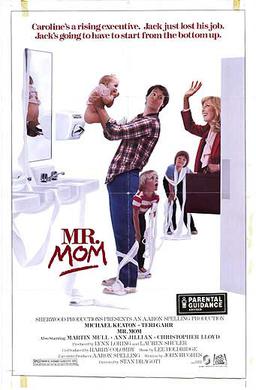
Premise and themes
The central premise follows an ordinary suburban family thrown into disorder when the father loses his job and assumes the primary homemaker responsibilities. The film uses a succession of misadventures—childcare challenges, household mishaps and awkward re-entry to the job market—to examine assumptions about gender, work and competence. Its tone balances domestic satire and affectionate character comedy rather than sharp political polemic.
Cast and characters
- Michael Keaton as the befuddled but earnest father figure.
- Teri Garr as the wife who returns to paid work and must juggle career and family.
- Christopher Lloyd in a supporting role that adds energetic comic contrast.
Production and style
John Hughes, who would soon become widely known for his teen comedies and family films, wrote the screenplay. Director Stan Dragoti framed the story with broad set pieces and fast-paced gags common to early 1980s studio comedies. The setting and costume design reflect contemporary suburban life of that period, which also contributes to the film's nostalgic appeal for modern viewers.
Reception and legacy
Contemporary reviews were mixed: critics often praised the performances and warm tone while noting a reliance on sitcom-style jokes. The film performed well enough commercially to be considered a success for its studio and is frequently cited as an early screen highlight in Michael Keaton's career. Over time it has been discussed in cultural histories as one of the more prominent mainstream portrayals of a stay-at-home father during the 1980s.
Notable facts and distinctions
Mr. Mom stands out for taking a domestic role-reversal premise to a wide audience at a time when on-screen portrayals of fathers as primary caregivers were still uncommon. Its mix of slapstick, situational humor and social observation makes it a useful reference point in discussions about changing family dynamics in late 20th-century popular culture.
Where to learn more
For further information on the director and principal cast, follow the links embedded above. The film is also referenced in retrospectives about 1980s American comedies and in overviews of John Hughes's early screenwriting career.
Author
AlegsaOnline.com Mr. Mom (1983 film) Leandro Alegsa
URL: https://en.alegsaonline.com/art/143051