
Midnight Express (1978 film)
1978 prison drama directed by Alan Parker, adapted from Billy Hayes's memoir; acclaimed and controversial for its performances, score, and depiction of imprisonment and escape.
Overview
Midnight Express is a 1978 British–American drama directed by Alan Parker and adapted from the 1977 memoir by Billy Hayes. The film follows an American who is arrested in Turkey for drug smuggling, his time in harsh prisons, and his eventual attempt to escape. It became well known for its intense storytelling, memorable score, and a polarizing portrayal of foreign justice systems.
Image gallery
2 Images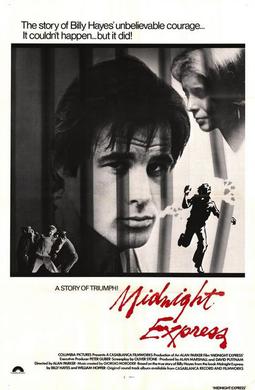

Story and themes
The narrative focuses on themes of imprisonment, survival and the psychological effects of confinement. While rooted in Hayes's own account, the screenplay—credited to Oliver Stone—heightens dramatic episodes to emphasize the protagonist’s desperation and the brutality of prison life. The film explores isolation, cultural misunderstanding, and the limits of endurance under oppressive conditions.
Cast, production and music
Brad Davis leads the cast, supported by Irene Miracle, Paul L. Smith and others, with notable performances by Randy Quaid and John Hurt. The production was distributed by Columbia Pictures. Giorgio Moroder’s electronic-tinged score became a distinctive element of the film and earned significant recognition.
Reception and controversy
Critically, Midnight Express received both praise and criticism. It earned multiple Academy Award nominations and won two Oscars; its awards and nominations are often cited when discussing the film’s impact on late-1970s cinema. At the same time, the movie provoked controversy for its portrayal of Turkish people and institutions. Critics, commentators, and some involved in the real events have pointed out dramatizations and inaccuracies that transformed the memoir into a more sensational cinematic account. For awards and industry recognition see related records.
Legacy and influence
Midnight Express remains influential in the prison-film genre and is frequently discussed in studies of adaptation and representation. Its urgent tone, gritty performances and atmospheric music continue to be referenced by filmmakers and critics, while debates about ethical dramatization and cultural stereotyping keep the film in academic and public conversation.
- Director: Alan Parker
- Based on: Billy Hayes memoir
- Distributor: Columbia Pictures
- Notable cast: Brad Davis, Randy Quaid, John Hurt
- Awards: multiple Academy Award nominations and two wins (see records)
Author
AlegsaOnline.com Midnight Express (1978 film) Leandro Alegsa
URL: https://en.alegsaonline.com/art/142662