
Merano (Meran) — spa town and cultural centre in South Tyrol
Merano (Italian Merano, German Meran) is a historic spa town in Trentino‑Alto Adige/Südtirol, northern Italy, known for thermal baths, mild microclimate, alpine scenery and a mix of Italian and Austrian cultural influences.
Overview
Merano (Meran in German, Maran in Ladin) is a town in the autonomous region of Trentino‑Alto Adige/Südtirol in northern Italy. Set in a valley at the edge of the Alps, it has long been a regional centre for health tourism and mountain recreation. In 2019 the population was about 41,172, and the town functions as an economic and cultural hub for the surrounding orchards and mountain communities.
Image gallery
10 Images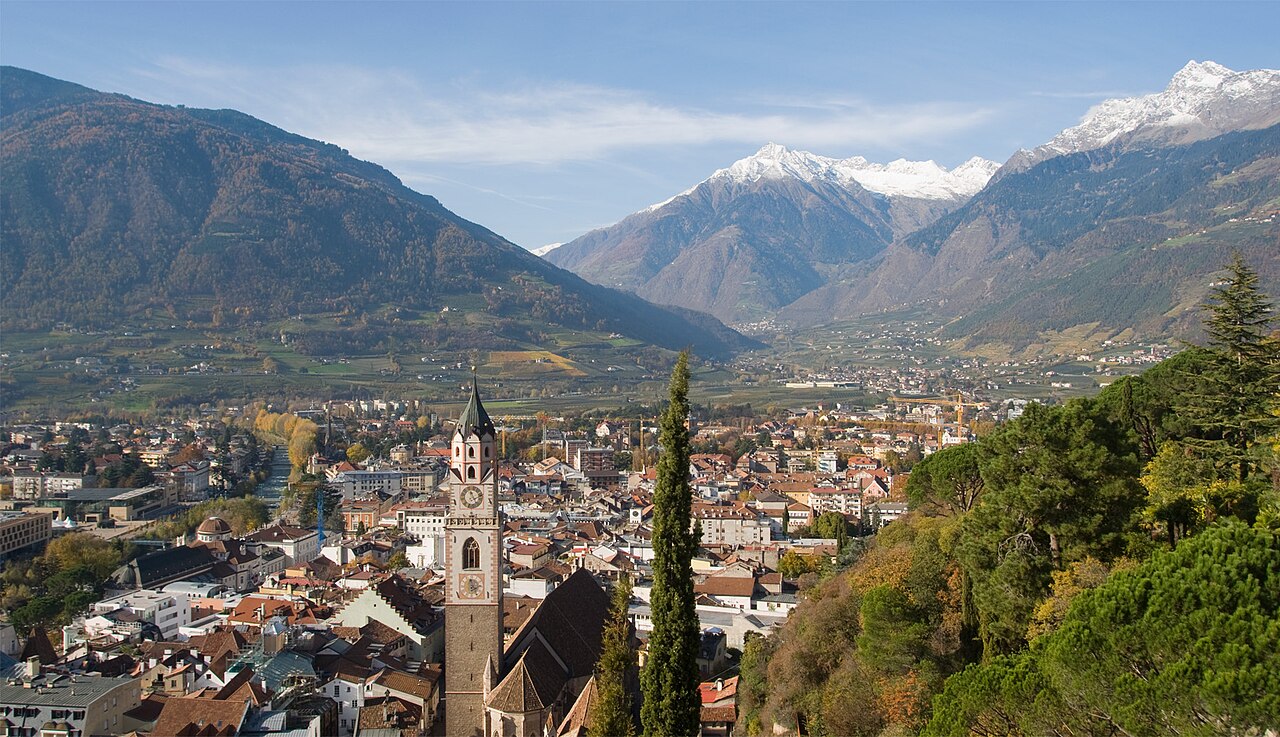




Character and landscape
Merano sits where the Passer (Passirio) river flows through steep valley walls. Its sheltered position creates a noticeably mild microclimate, allowing Mediterranean plants such as palms and cypresses to flourish alongside alpine species. The town combines a compact medieval centre with promenades, spa facilities, and access to highland trails and winter sports areas on nearby slopes.
History and development
Originally a medieval market and castle town, Merano developed important connections to the Tyrolean principality and later the Habsburg realms. During the 19th century it became fashionable as a health resort, attracting visitors seeking the benefits of thermal waters and clean mountain air. This period shaped much of the town's grand civic architecture and Kurhaus tradition.
Economy, tourism and culture
Modern Merano relies heavily on tourism, mixing wellness and outdoor activities with cultural events. Key draws include thermal baths, formal gardens, music and food festivals, historic arcades and local markets. The economy also benefits from nearby agriculture: the broader South Tyrol area is known for apple orchards, vineyards and high‑quality alpine produce.
Notable sites
- The Kurhaus and historic promenades along the river.
- Trauttmansdorff Gardens, a botanical attraction overlooking the valley.
- Medieval streets and arcades in the town centre, with cafés and shops.
- Access to mountain trails and ski areas via nearby lifts and cable cars.
Language and identity
Merano exemplifies the bilingual, cross‑cultural character of South Tyrol: German and Italian are widely used in public life, while Ladin appears in local toponyms. Its architecture, cuisine and festivals reflect a blend of Alpine and Mediterranean influences, making the town notable both as a historic spa destination and as a gateway to Tyrolean mountain culture.
Author
AlegsaOnline.com Merano (Meran) — spa town and cultural centre in South Tyrol Leandro Alegsa
URL: https://en.alegsaonline.com/art/142559