
List of heads of government of Ivory Coast
Overview and context for the heads of government (prime ministers) of the Republic of Côte d'Ivoire since independence in 1960, with summary of the office, notable holders and political role.
Overview
The head of government of Ivory Coast is commonly known as the prime minister, the official who leads the cabinet and is charged with coordinating governmental policy. In the political system of the Republic of Côte d'Ivoire the prime minister operates under a strong presidency: the president appoints the prime minister and retains primary executive authority. The office has been an important instrument for implementing policy, forming governments of national unity and managing transitions in times of crisis.
Image gallery
10 Images


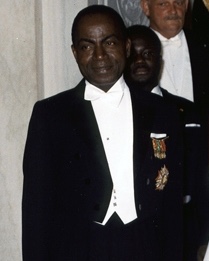


Historical background
Ivory Coast gained independence from France in 1960. Since then the structure and prominence of the prime minister's office have changed with shifting political circumstances. During periods of single-party or dominant-party rule the office sometimes had limited autonomy; in other times—particularly after political or military crises and during power-sharing arrangements—the prime minister has played a central role in administering day-to-day government and facilitating reconciliation.
Notable officeholders
Below are several prime ministers whose tenures are often highlighted in modern Ivorian political history. This is not an exhaustive chronological list but a selection to illustrate the office's variety of functions and political backgrounds.
- Alassane Ouattara — An economist who served as prime minister before later becoming president; his career illustrates how the post can be a stepping stone to higher national leadership.
- Charles Konan Banny — A technocrat who led transitional arrangements in the aftermath of political upheaval, reflecting the office's role in stabilization.
- Guillaume Soro — A former rebel leader who became prime minister as part of a peace process and national reconciliation effort.
- Daniel Kablan Duncan — A senior politician who has held the office at different times and exemplifies continuity in public administration.
- Hamed Bakayoko — A prominent political figure who served as prime minister until his death on 10 March 2021.
- Patrick Achi — Named acting prime minister on 8 March 2021 to assume the duties of Hamed Bakayoko; his appointment illustrates how acting or interim arrangements are used after sudden vacancies.
Selection, powers and political role
The president of Ivory Coast appoints the prime minister, who is normally responsible for forming the cabinet and implementing government policy. In practice, the balance of authority between president and prime minister depends on personalities, the strength of political parties and the broader context: during coalition governments and post-conflict settlements, the prime minister frequently serves as a bridge between competing factions. When the office is held by an acting or interim prime minister, powers may be limited to caretaking duties until a permanent appointment is confirmed.
Significance and notable facts
The prime ministership in Ivory Coast has been central to efforts at national reconciliation, economic management and crisis response. Changes in the office often reflect broader shifts in the country's political landscape — for example, negotiations after armed conflict, constitutional changes, or presidential transitions. For readers seeking a complete chronological list of all heads of government and detailed dates, official government records and contemporary reference works provide comprehensive lists and timelines.
For further official information and current listings consult government publications and national archives, and see primary resources linked from the country's official portal: Republic of Côte d'Ivoire.
Author
AlegsaOnline.com List of heads of government of Ivory Coast Leandro Alegsa
URL: https://en.alegsaonline.com/art/141621