
Killing Heat (1981 film)
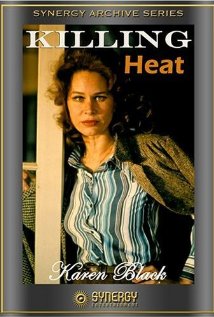
Killing Heat is a 1981 international drama film directed by Michael Raeburn, adapted from Doris Lessing's novel The Grass Is Singing; it examines colonial-era tensions, race and gender in southern Africa.
Overview
Killing Heat is a 1981 drama film directed by Michael Raeburn, adapted from Doris Lessing's 1950 novel The Grass Is Singing. The movie is an international co-production credited to Zambia, Sweden, Zimbabwe and Australia and was distributed in part by the Swedish Film Institute. It translates Lessing's novelistic focus on social pressure and moral decline into a cinematic portrait of life on a southern African farm during the colonial era. For background on the novel, see Doris Lessing's The Grass Is Singing.
Image gallery
2 Images
Plot and themes
The narrative centers on the life of a white woman living on an isolated farm and her increasingly strained relations with the people around her. The film explores themes that were central to Lessing's book: racial inequality, gender expectations, personal isolation and the destructive effects of colonial society. Rather than presenting a conventional plot-driven thriller, Killing Heat emphasizes atmosphere, character psychology and the social forces that constrain its protagonists.
Production and style
Directed by Michael Raeburn, the film was produced as an international collaboration combining production resources and talent from multiple countries. The adaptation reduces some of the novel's interior narration in favor of visual and performance-based storytelling. Cinematic choices in lighting, location and pacing aim to evoke the heat, tension and social claustrophobia of the setting, a key element of the story's mood.
Cast
- Karen Black — lead performance
- John Thaw — supporting role
- John Kani — significant supporting role
- Patrick Mynhardt — ensemble cast
- John Moulder-Brown — ensemble cast
Reception and legacy
Upon release, Killing Heat attracted attention for its source material and for its international production profile. Critical responses were mixed; reviewers have praised the performances and the film's visual evocation of a tense colonial landscape while sometimes noting the challenges of adapting a psychologically inward novel for the screen. Over time it has been discussed in contexts that include adaptations of postwar British colonial literature and films that examine race and gender in southern Africa.
Notable distinctions
The film is often noted for being a cross-national production that sought to bring a well-known literary treatment of colonial life to cinema audiences. It also stands as one of the screen interpretations of Doris Lessing's work and is referenced in studies of literary adaptations. For information on the principal contributors, see links to the novel and the actors above: novel, John Thaw, Karen Black, John Kani.
Author
AlegsaOnline.com Killing Heat (1981 film) Leandro Alegsa
URL: https://en.alegsaonline.com/art/140891