
Bridgeport, Oklahoma
Bridgeport is a small municipal community in Oklahoma, United States. This article summarizes its setting, typical origins, economy, governance, and local features for general reference.
Overview
Bridgeport is a city in Oklahoma in the United States. As a small municipal community in rural Oklahoma, it exemplifies the scale and character of many towns across the state: limited commercial services, a close-knit population, and connections to surrounding agricultural and natural resources.
The name Bridgeport typically signals a historic crossing or a transportation node; in small towns this often meant a bridge, railroad stop, or river crossing that shaped early settlement and local trade. The built environment usually includes a main street, municipal buildings, and residential neighborhoods extending into farmland.
Image gallery
1 Image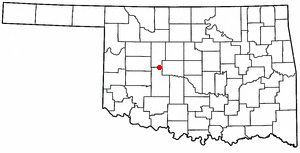
History and development
Like many Oklahoma communities, Bridgeport’s development is best understood in the context of regional forces: Indigenous presence before European settlement, 19th- and early 20th-century migration, transportation improvements and agricultural settlement. Railroads, roadways and nearby waterways frequently determined where towns grew and which local businesses thrived.
Economic cycles that affected the wider region — such as national agricultural markets and energy booms and busts — have often influenced local fortunes. Preservation of older buildings, if present, can reflect periods of growth from earlier decades and the continuing importance of local institutions.
Economy, services and culture
Bridgeport typically relies on a mixed local economy: agriculture and ranching in surrounding areas, small retail and service businesses in town, and residents who commute to larger centers for work. Public services commonly include a city or town council, volunteer or small professional fire department, a post office, and local schools or shared school districts.
- Community life: Local churches, civic clubs and school events often form the social core.
- Infrastructure: Roads, bridges and sometimes rail links connect residents to regional markets.
- Attractions: Towns may feature historic buildings, parks, and annual fairs or festivals.
For specific statistics, municipal contacts, maps and records, consult state or federal resources and local government offices. Regional histories and county-level archives provide useful context for understanding Bridgeport’s founding, changes over time, and present-day role within Oklahoma’s rural landscape.
Related articles
Author
AlegsaOnline.com Bridgeport, Oklahoma Leandro Alegsa
URL: https://en.alegsaonline.com/art/14078