
James Bowdoin (1726–1790): American statesman, scientist, and patron
James Bowdoin was a leading Massachusetts political figure, scientist, and philanthropist of the Revolutionary era; president of the state convention, governor, and founder of learned societies.
James Bowdoin II (August 7, 1726 – November 6, 1790) was a prominent Massachusetts public figure whose life combined politics, scientific inquiry, and charitable support for learning. A wealthy Boston native and Harvard alumnus of his generation, Bowdoin played an influential role during the American Revolution, helped guide the framing of state government, and supported institutions that advanced the arts and sciences.
Image gallery
9 Images


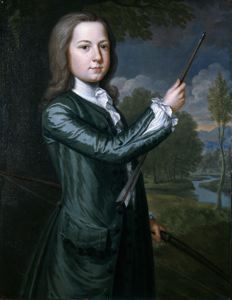
Political leadership and constitutional work
During the Revolution Bowdoin served at the head of Massachusetts's provisional government. From 1775 to 1777 he presided over the executive council of the Massachusetts Provincial Congress and acted as the de facto chief executive of the commonwealth in a turbulent period. He was later chosen to preside over the state constitutional convention in 1779, which produced a charter that would be adopted as the Massachusetts Constitution; this convention worked alongside leading figures of the time and drew on drafts and proposals made by other delegates. For further context on the convention he led see constitutional convention.
After the Revolution Bowdoin continued in electoral politics. He stood for governor in 1780 but was defeated by John Hancock in a closely watched contest; the campaign illustrated early party and personality dynamics in the new republic. Following Hancock's resignation, Bowdoin won election as governor in 1785, but he failed to hold the office in the 1787 rematch with Hancock. Contemporary accounts describe these contests as contests between differing political styles and local influence; see entries on Governor of Massachusetts and on John Hancock for related material.
Scientific interests and civic institutions
Bowdoin pursued scientific studies alongside his public career. He conducted research and correspondence on electricity and related topics, collaborating with or exchanging ideas with leading experimenters of the era, including Benjamin Franklin; see Benjamin Franklin. His scientific reputation gained international recognition and he was elected a Fellow of the Royal Society of London. At home he helped establish and lead organizations to promote knowledge: he was a founder and the first president of the American Academy of Arts and Sciences, an institution dedicated to advancing learning in the new nation (American Academy of Arts and Sciences).
Legacy and remembrance
Bowdoin left a lasting civic and educational legacy. His name was chosen for Bowdoin College in Maine in recognition of his support for learning and patronage of the liberal arts; the college remains a prominent liberal arts institution (Bowdoin College). He died in 1790 from complications attributed to dysentery; his passing drew wide public attention and a large funeral procession in Boston, reflecting his standing in the community (dysentery).
Notable facts
- Combined roles as statesman and scientist were typical of Enlightenment-era leaders who linked public service with patronage of knowledge.
- He presided over important transitional institutions in Massachusetts during the Revolution and early statehood.
- His institutional efforts helped establish long-lived centers for scholarship and public affairs.
Taken together, James Bowdoin's career illustrates the close connection between civic leadership and the promotion of learning in the early United States. His service in government, his scientific engagement, and his philanthropy contributed to institutions and debates that shaped Massachusetts and the fledgling republic.
Author
AlegsaOnline.com James Bowdoin (1726–1790): American statesman, scientist, and patron Leandro Alegsa
URL: https://en.alegsaonline.com/art/140250