
Inferno (1980 film)
Inferno is a 1980 Italian supernatural horror film by Dario Argento, the second entry in his 'Three Mothers' trilogy. Noted for its stylized visuals, eerie score and cult status in horror cinema.
Overview
Inferno is a 1980 Italian supernatural horror film directed by Dario Argento. Conceived as a follow-up to 1977's Suspiria, it continues Argento's exploration of a hidden coven of witches known as the "Three Mothers." The film is credited with an artful blend of giallo elements and supernatural terror and was distributed internationally by 20th Century Fox.
Image gallery
1 Image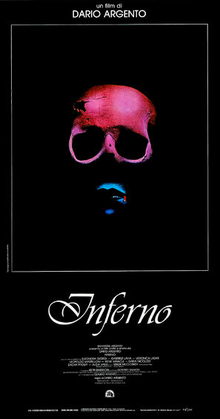
Style and characteristics
Inferno is widely remembered for its highly stylized visual language: dramatic lighting, saturated color schemes and elaborate set design create a dreamlike atmosphere rather than naturalistic realism. The film emphasizes atmosphere and set-piece suspense over straightforward exposition. The musical score, created to complement the film's unnerving mood, plays a central role in building tension and shaping memorable sequences.
Principal cast and structure
The cast includes Irene Miracle, Leigh McCloskey, Eleonora Giorgi and Daria Nicolodi among others. Rather than following a single protagonist in a traditional three-act pattern, the narrative moves through linked episodes and revelations about an ancient malign presence, combining investigative threads with moments of surreal horror.
Production, trilogy context and themes
Inferno is the second installment in what fans and critics refer to as Argento's "Three Mothers" trilogy, which frames each film around a different aspect of a mythic witchly triumvirate. Where Suspiria focused on maternal dread and occult manipulation, Inferno expands the mythology and relocates the menace into urban settings. Production combined Italian filmmaking resources with locations and motifs intended to evoke international cities.
Reception and legacy
Upon release the film received mixed reviews but found a devoted audience among genre fans. Over time Inferno has been reassessed for its daring visual composition and its influence on later stylized horror cinema. It remains a touchstone for viewers interested in cinematic atmosphere, complex mise-en-scène and the intersection of giallo and supernatural horror.
Notable facts
- Inferno is often discussed together with Suspiria and the later The Mother of Tears as a thematic trilogy.
- Its approach to color, sound and architecture is frequently cited in studies of modern horror aesthetics.
- The film helped cement Argento's reputation as a director who blends visual art and genre storytelling.
Author
AlegsaOnline.com Inferno (1980 film) Leandro Alegsa
URL: https://en.alegsaonline.com/art/140042