
Ice Train (Harold Hogue) — American professional wrestler
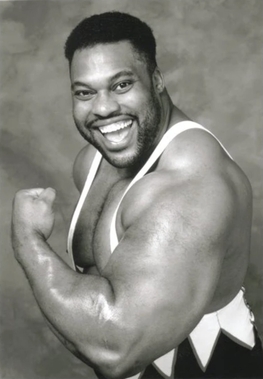
Harold Fitzgerald Hogue Sr., known as Ice Train and M.I. Smooth, is a retired American professional wrestler best known for his appearances with World Championship Wrestling (WCW) during the 1990s and early 2000s.
Overview
Harold Fitzgerald Hogue Sr. (born November 13, 1967) is an American retired professional wrestler who performed primarily for World Championship Wrestling. Billed under the names Ice Train and later M.I. Smooth, Hogue was a recognizable part of WCW's roster through much of the 1990s and into 2001. His career took place during a period of national expansion and intense competition in American professional wrestling.
Image gallery
2 Images
Early life and background
Hogue was born on November 13 in the year noted as 1967 and was billed from Atlanta, Georgia. Public biographies of wrestlers from his era often emphasize regional origins as part of character presentation; Hogue's Atlantic/Georgia billing tied him to a well-known wrestling region in the Southeastern United States.
WCW tenure and professional career
Hogue began appearing on World Championship Wrestling television in the early 1990s and remained with the company until shortly after its acquisition by the World Wrestling Federation in 2001. In WCW he worked as both a singles competitor and as part of tag-team matches, appearing on weekly shows and on larger pay-per-view cards. While he did not reach the top-tier world-title level, he was a steady mid-card presence in a large roster that included many long-tenured and rotating performers.
Ring personas and in-ring style
As Ice Train, Hogue was presented as a power-based, athletic big man whose style emphasized strength, impact and endurance rather than high-flying or highly technical maneuvers. Later in his WCW run he adopted the M.I. Smooth persona, a repackaging that highlighted a more polished, character-driven presentation. These shifts reflect a common practice in professional wrestling where performers are repackaged to fit new storylines or audience trends.
Notable roles and matches
During his time in the company Hogue was involved in a variety of televised matches and storylines that showcased him as a reliable performer for the mid-card and undercard. He worked alongside and against a wide array of talent during WCW's most active national period. For context on the environment in which he worked, consult histories of WCW in the 1990s and the business conditions that led to the company's sale.
Retirement and later life
Hogue retired from regular in-ring competition around the time WCW was sold to the WWF in 2001 and largely stepped away from television-level wrestling after that transition. Although detailed public records of his post-wrestling career are limited, he is generally described as having left the national spotlight and reduced his public wrestling activity.
Legacy
Ice Train is remembered by fans of 1990s professional wrestling as a durable, power-oriented performer who filled an important role on weekly programming and pay-per-view events. His career illustrates how many wrestlers contributed to the depth and variety of large national promotions: not all performers became world champions, but many sustained long careers and remain part of the period's collective memory.
For more information about the era and promotion in which Hogue worked, see general overviews of WCW and examinations of the industry's changes around 2001, including coverage of the acquisition by the WWF.
Author
AlegsaOnline.com Ice Train (Harold Hogue) — American professional wrestler Leandro Alegsa
URL: https://en.alegsaonline.com/art/139987
Sources
- cagematch.de : "Ice-Train: Tournaments"
- profightdb.com : "Pro Wrestling Illustrated (PWI) 500 for 1993"