
Heart of Dragon (1985) — Hong Kong–Japanese action drama film
1985 Hong Kong–Japanese action comedy-drama directed by Sammo Hung, starring Jackie Chan; known for blending martial-arts action with family drama and featuring choreography by members of the Hong Kong action community.
Overview
Heart of Dragon is a 1985 Hong Kong–Japanese action comedy-drama directed by Sammo Hung, who also appears in the film. The movie pairs Hung with Jackie Chan in leading roles and was distributed by Golden Harvest. It is credited with balancing broad action set pieces and a more restrained, dramatic storyline than many of its contemporaries, combining crime, physical comedy and family-oriented themes. The film is known in Chinese as 龙的心 (simplified) and 龍的心 (traditional).
Image gallery
1 Image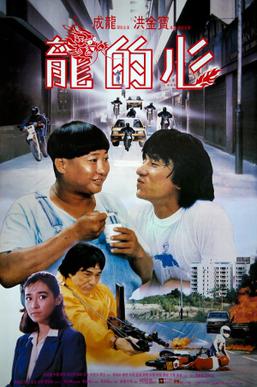
Cast, crew and production
The production brought together several well-known figures from the Hong Kong martial-arts cinema scene. Sammo Hung directed and acted, Jackie Chan co-starred, and the action unit included experienced stunt coordinators and fighters. Among the credited performers are Emily Chu, Mang Hoi, Chin Kar-lok, Yuen Wah, Corey Yuen, James Tien, Dick Wei, Lau Kar-wing and Phillip Ko. The project also involved action direction with contributions from Yuen Biao and others from that generation of stunt professionals.
Characteristics and style
Heart of Dragon departs from straight slapstick or nonstop martial-arts spectacle by inserting emotional and familial elements into its plot. Jackie Chan's performance is often described as comparatively restrained, serving a dramatic function alongside the film's action set pieces. Fight choreography retains Hong Kong cinema's kinetic energy, while the narrative explores loyalty, responsibility and moral choices amid criminal conflicts.
Action choreography and filmmaking
The film exemplifies 1980s Hong Kong action filmmaking: compact, well-rehearsed physical sequences, practical stunts and clear editing that highlights individual performers' skills. The action team—drawn from a close-knit cohort of martial artists and stuntmen—focused on tangible stunt work rather than visual effects, which contributes to the film's period charm and visceral impact.
Reception and legacy
At release, Heart of Dragon received a mixed to positive response from audiences and critics who praised its performances and stunts while noting the tonal shift toward drama. Over time it has been regarded as an interesting entry in both Sammo Hung's and Jackie Chan's filmographies because it explores more emotional terrain than many martial-arts comedies of the era. For viewers researching the careers of these artists, the film provides a clear example of collaboration among the Hong Kong action community.
Notable facts
- Distributed by Golden Harvest, a dominant Hong Kong studio of the period.
- Features a large ensemble of respected Hong Kong stunt performers and character actors.
- Jackie Chan's involvement is often highlighted in retrospectives; see more on his career here.
Author
AlegsaOnline.com Heart of Dragon (1985) — Hong Kong–Japanese action drama film Leandro Alegsa
URL: https://en.alegsaonline.com/art/139575