
Excalibur (1981 film)
John Boorman’s 1981 retelling of the Arthurian legend, notable for its mythic tone, striking visuals, ensemble cast, and lasting influence on cinematic portrayals of King Arthur.
Overview
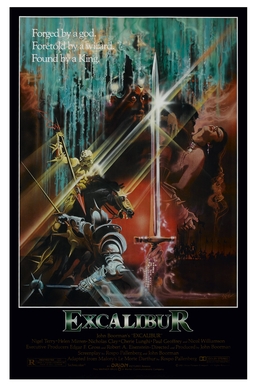
Excalibur is a 1981 fantasy film directed by John Boorman that adapts the core stories of the Arthurian legend. The film follows the rise of King Arthur, the role of Merlin, the forging and recovery of the sword Excalibur, and the eventual fall of Camelot. Presented with a serious, often mythic tone, it blends medieval spectacle with stylized imagery to retell familiar episodes from the cycle of Arthur.
Image gallery
6 Images


Production and style
Shot largely in the British Isles, the movie is known for its rich, painterly cinematography and a dramatic, modern-tinged musical score. Its visual approach favors strong contrasts, misty landscapes, and ritualized scenes that emphasize mythic resonance over historical realism. The film’s design and editing create a deliberate, sometimes operatic pacing that aims to evoke legendary time and larger-than-life characters.
Cast and characters
Excalibur features an ensemble cast that helped launch or advance several actors’ careers. Principal performers include:
- Nigel Terry as King Arthur
- Helen Mirren in a prominent supporting role
- Nicol Williamson as Merlin
- Corin Redgrave
- Patrick Stewart
- Clive Swift
- Liam Neeson
- Gabriel Byrne
The performances range from lyrical and mystical to brutal and human, matching the film’s alternation between high romance and darker moral conflict.
Themes and reception
Excalibur explores themes of destiny, chivalry, betrayal, and the tension between magic and political power. On release it provoked divided critical responses: many praised its ambition, visual mastery and atmosphere, while some critics were unsettled by its heavy symbolism and episodic structure. The film received an Academy Award nomination in 1982, reflecting recognition by the industry for elements of its craft.
Legacy and influence
Over time Excalibur has become a touchstone for cinematic Arthurian adaptations and a cult favorite among fantasy film audiences. Its images and tone influenced later filmmakers seeking to fuse mythic storytelling with bold visual design. The film was distributed by Warner Bros. and continues to be discussed in studies of myth on film and in retrospectives of the careers of its director and principal cast.
Author
AlegsaOnline.com Excalibur (1981 film) Leandro Alegsa
URL: https://en.alegsaonline.com/art/138193