
D.C. Cab (1983) — American ensemble comedy about a Washington taxi fleet
1983 ensemble comedy film about a mismatched taxi company in Washington, D.C., directed by Joel Schumacher and featuring Mr. T, Max Gail, Adam Baldwin, Gary Busey and Marsha Warfield.
Overview
D.C. Cab, released in 1983 and sometimes marketed as Street Fleet, is a comedic ensemble film set among drivers working for a struggling taxi company in Washington, D.C. The story follows a ragtag group of cabbies who band together to save their company from financial collapse and a rival service. The film mixes broad humor, character-driven scenes and the period's pop-culture style to portray life on the city streets.
Image gallery
1 Image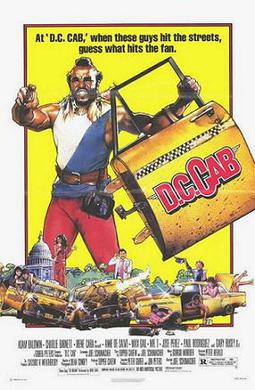
Cast and characters
The movie features an ensemble cast combining established and up-and-coming performers. Principal players include Max Gail, Adam Baldwin, the pop-cultural personality Mr. T, Gary Busey and Marsha Warfield. Supporting roles and colorful passengers help create a fast-moving series of comic episodes and set pieces.
- Director: Joel Schumacher
- Key cast: Max Gail, Adam Baldwin, Mr. T, Gary Busey, Marsha Warfield
- Distributor: Universal Pictures
Production and style
D.C. Cab was conceived as a lighthearted, action-tinged comedy built around an ensemble rather than a single star. Its visual style and soundtrack reflect early 1980s popular tastes, and the film uses vehicle-centered set pieces and chase sequences to keep the pace energetic. The narrative emphasizes friendship, loyalty and the hustle of working-class characters in an urban setting.
Reception and legacy
Contemporary responses to the film were mixed, with some viewers enjoying its cast and comic moments while critics noted uneven plotting and tone. Over time it has retained interest as a cultural snapshot of the early 1980s and as an early screen credit for several performers who later became better known. The film occasionally appears in retrospectives about 1980s comedies and the careers of its cast and director.
Notable facts and distinctions
Aside from its alternate title, Street Fleet, D.C. Cab is often remembered for its eclectic ensemble and for bringing together performers from television, music and film. Its combination of character comedy, slapstick and urban action distinguishes it from single-hero comedies of the same period and illustrates the era's appetite for group-driven, high-energy entertainment.
Questions and answers
Q: What is D.C. Cab?
A: D.C. Cab is a 1983 American comedy movie, directed by Joel Schumacher.
Q: What are some of the stars that appeared in D.C. Cab?
A: Max Gail, Adam Baldwin, Mr. T, Gary Busey, and Marsha Warfield are some of the stars that appeared in D.C. Cab.
Q: Was the movie also known by another name?
A: Yes, the movie was also known as Street Fleet.
Q: Who distributed D.C. Cab?
A: D.C. Cab was distributed by Universal Pictures.
Q: What genre is D.C. Cab?
A: D.C. Cab is a comedy movie.
Q: When was D.C. Cab released?
A: D.C. Cab was released in 1983.
Q: Who directed D.C. Cab?
A: D.C. Cab was directed by Joel Schumacher.
Author
AlegsaOnline.com D.C. Cab (1983) — American ensemble comedy about a Washington taxi fleet Leandro Alegsa
URL: https://en.alegsaonline.com/art/137161