
Dún Laoghaire
Coastal town and county town of Dún Laoghaire–Rathdown near Dublin Bay, noted for its 19th‑century harbour, long piers, maritime history, promenades, and role as a Dublin suburb and transport hub.
Overview
Dún Laoghaire is the administrative county town of Dún Laoghaire–Rathdown and lies on the southern shore of Dublin Bay in County Dublin, Ireland. It functions as a coastal suburb of Dublin with a mix of residential neighbourhoods, shops and cultural amenities, and is widely recognised for its long stone piers and harbour.
Image gallery
10 Images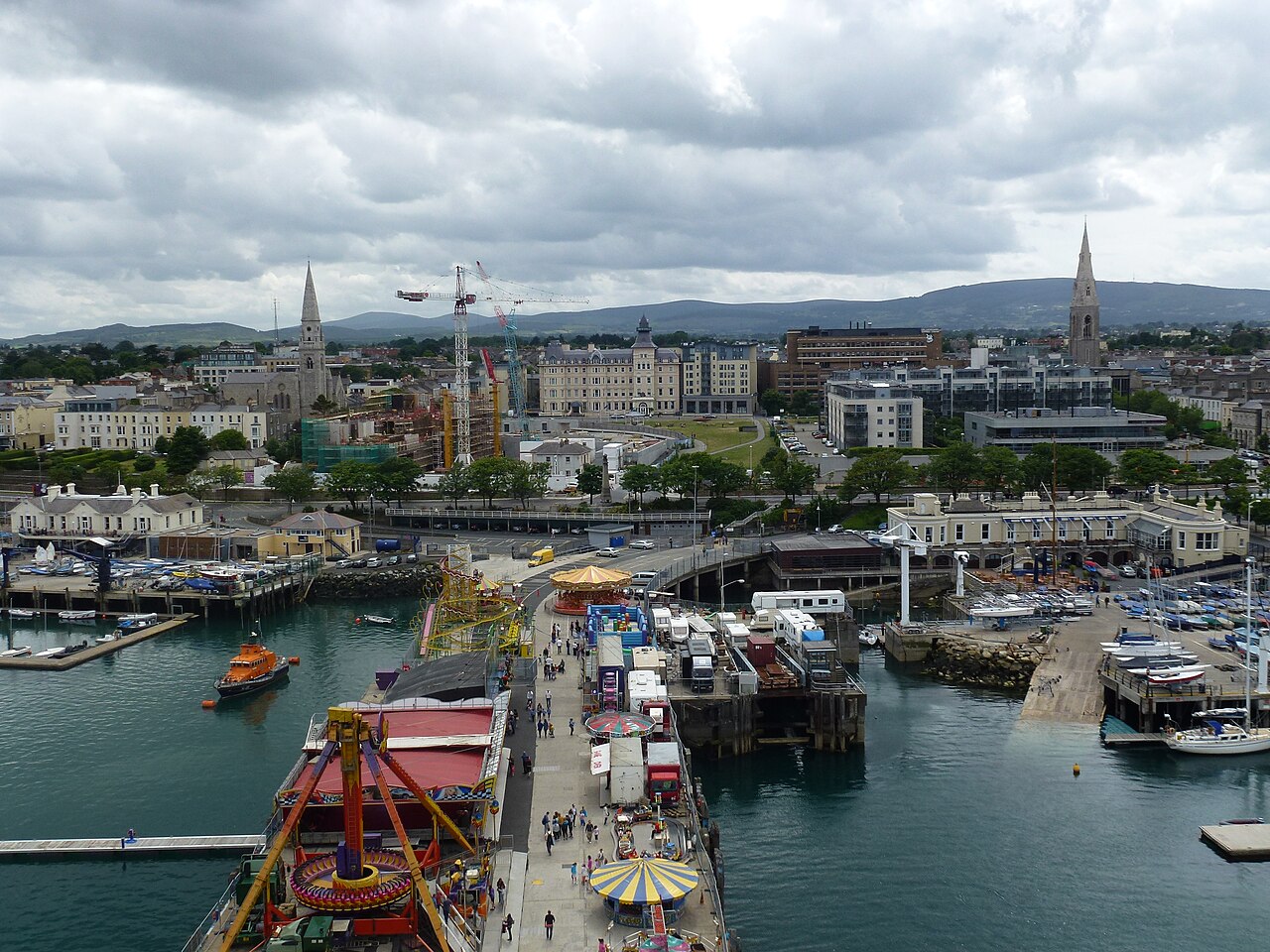


Name and origins
The name Dún Laoghaire comes from the Irish for “fort of Laoghaire,” traditionally linked to Laoghaire, a ruler from early medieval Ireland. The town expanded substantially in the 19th century when the harbour and protective piers were constructed to shelter shipping and to serve packet and mail services across the Irish Sea. For a time it was known as Kingstown after a royal visit; it later reverted to its original Irish name.
Harbour, piers and maritime role
The harbour is the town’s defining feature: broad stone East and West Piers provide an extended promenade and protect an inner harbour basin. Historically the port handled passenger and mail ferries to Britain and played a key role in coastal trade and lifeboat services. Today the harbour supports leisure boating, sailing events and marine-related businesses, while its promenades are popular with walkers and anglers.
Transport, facilities and culture
Dún Laoghaire is well connected to Dublin by suburban rail and bus services, making it an established commuter town. Local facilities include public parks, a municipal library and cultural centre, theatres, cafés and shops. The town hosts regular maritime and community events, and its Victorian and Edwardian architecture is still visible along many streets.
Attractions and notable facts
- Walks along the East and West Piers, popular for views of Dublin Bay.
- People’s Park and weekend markets that attract local shoppers.
- Cultural venues and community festivals, including yacht regattas and summer events.
- A history linked to 19th‑century harbour engineering and cross‑channel transport.
Dún Laoghaire combines maritime heritage with modern suburban life: its piers and harbour remain a focal point for recreation and local identity, while its proximity to Dublin ensures continuing economic and cultural ties to the capital.
Author
AlegsaOnline.com Dún Laoghaire Leandro Alegsa
URL: https://en.alegsaonline.com/art/137159