
Crew Dragon Demo-2: first crewed test flight of SpaceX's Crew Dragon
Crew Dragon Demo-2 was SpaceX's first crewed test flight, launched 30 May 2020 with NASA astronauts Doug Hurley and Bob Behnken to the International Space Station, restoring U.S. crewed launches and validating Crew Dragon.
Crew Dragon Demo-2 was the inaugural crewed demonstration flight of SpaceX's Crew Dragon capsule, flown under NASA's Commercial Crew Program. Launched from Cape Canaveral on 30 May 2020, the mission carried two NASA astronauts to the International Space Station (ISS) and marked the return of crewed orbital launches from United States soil after the retirement of the Space Shuttle in 2011. The flight tested end-to-end systems, procedures and operational readiness of a commercially built crew vehicle operated in partnership with a government agency. For company information see SpaceX and for the station context see the International Space Station.
Image gallery
10 Images






Background
The Demo-2 mission was part of a broader effort by NASA to restore domestic crew launch capability through competitive contracts with private industry. The Commercial Crew Program funded development and certification of crew transportation systems designed to carry astronauts to and from low Earth orbit. Demo-2 served as a verification mission to demonstrate that Crew Dragon could safely transport crew and operate in the real spaceflight environment before routine operational missions began.
Crew and vehicle
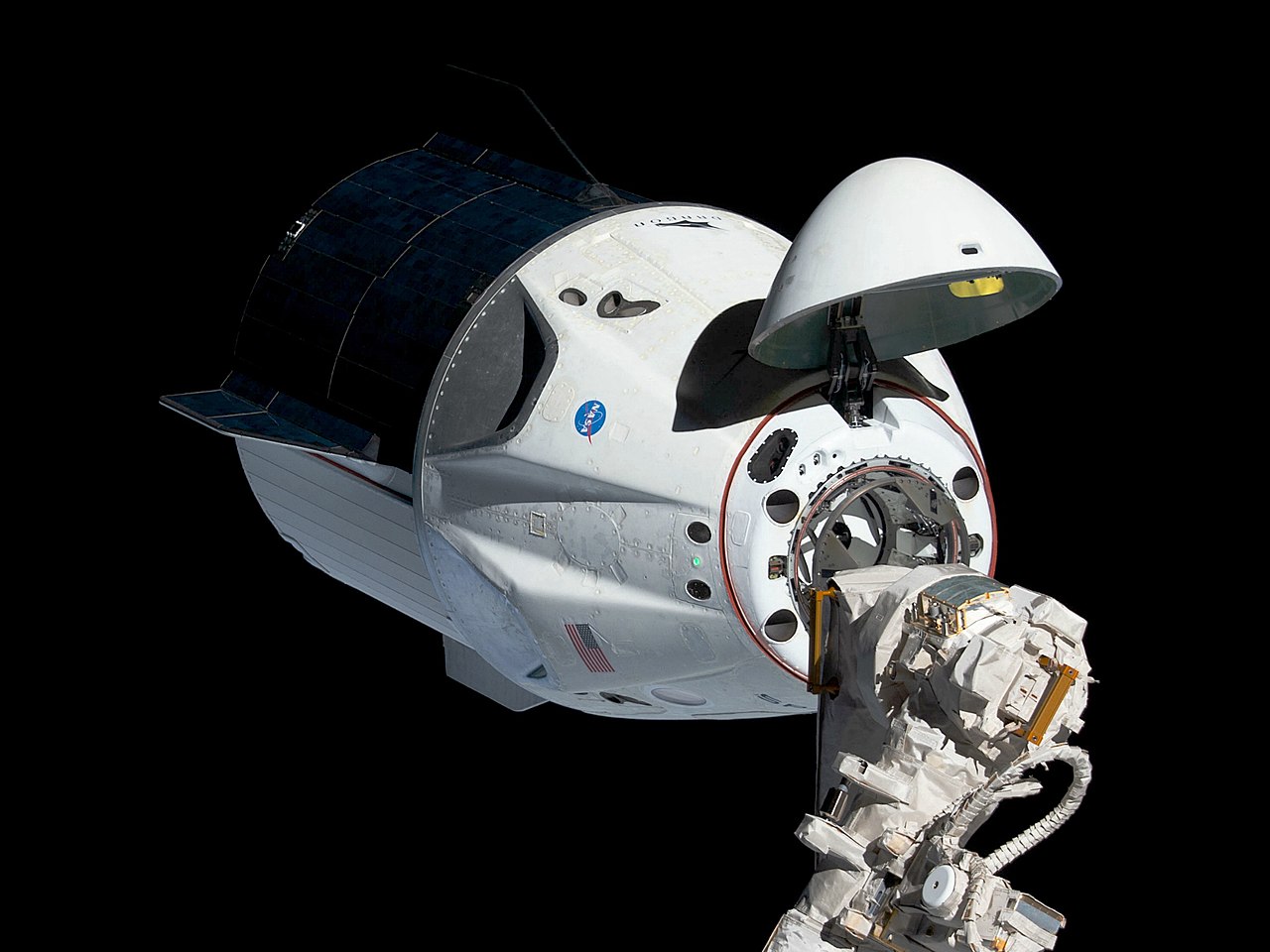
The two-person crew consisted of NASA astronauts Douglas G. Hurley (commander) and Robert L. Behnken (joint operations commander). The capsule used on Demo-2 was the Crew Dragon spacecraft that the crew named Endeavour in tribute to earlier U.S. human spaceflight heritage. The vehicle featured automated rendezvous and docking capability, touchscreen controls for the crew, integrated life-support systems, and a launch-abort system designed to protect occupants during ascent. The launch vehicle was a Falcon 9 rocket using a reusable first stage, reflecting SpaceX's emphasis on reusability.
Launch, rendezvous and docking
Demo-2 lifted off from Cape Canaveral atop a Falcon 9 booster and conducted an orbital insertion that placed the capsule on a trajectory to the ISS. After phasing and approach maneuvers the spacecraft performed an automated docking to a station docking port, demonstrating its guidance, navigation and control systems as well as the docking adaptor interface used for visiting vehicles. While docked, the crew performed a series of in-orbit tests of life-support, avionics, communications and other systems, and also participated in routine station operations and joint crew activities.
On-orbit activities and duration
During its stay at the ISS the Demo-2 crew tested procedures for manual control, emergency responses, and long-duration habitability of the capsule while docked. The crew transferred supplies and conducted science and maintenance tasks alongside station personnel. The mission provided practical data on interfaces, suit performance, environmental control, and crew workflows that informed procedural updates and certification decisions for subsequent Crew Dragon flights.
Return and recovery
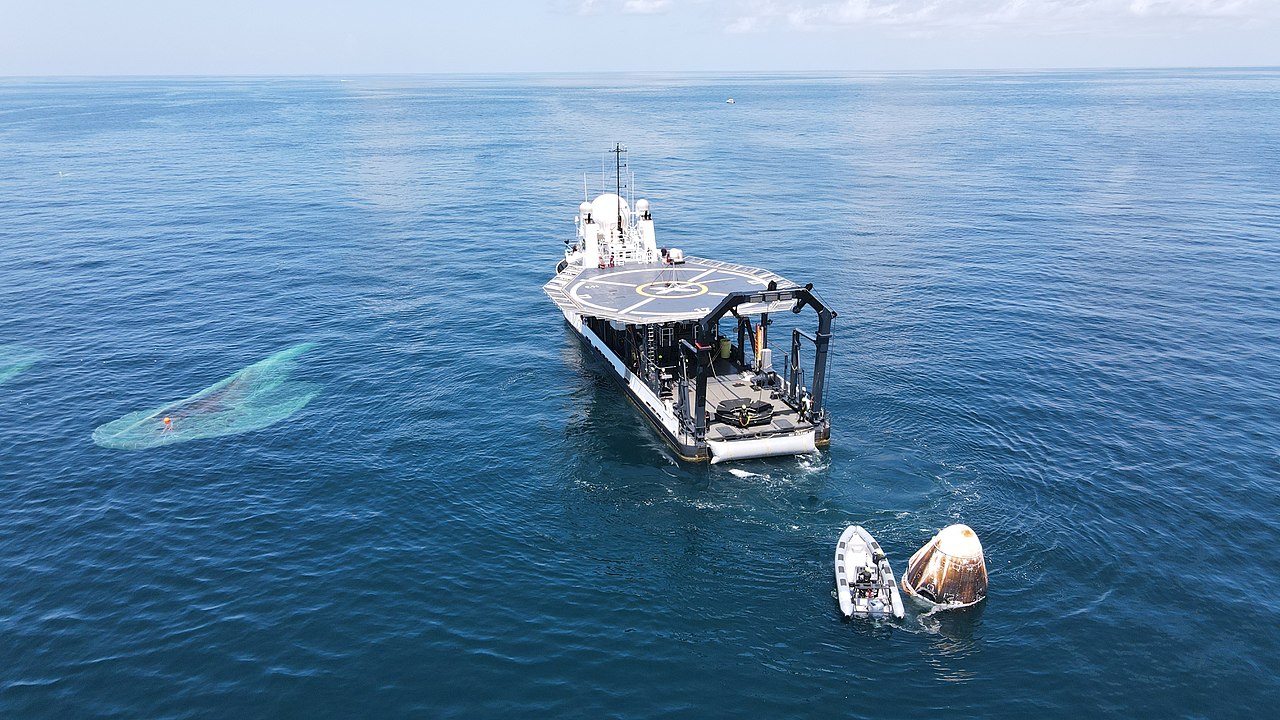
After completing the test period, the Crew Dragon undocked from the station, re-entered Earth's atmosphere, and conducted a parachute-assisted splashdown in the Atlantic Ocean. Recovery forces retrieved the capsule and crew, evaluating heat-shield performance, parachute performance and post-landing procedures. The successful return demonstrated the full end-to-end capability for crewed transport to and from low Earth orbit.
Significance and legacy
Demo-2 was widely regarded as a milestone in the transition to commercially provided human spaceflight services. It restored the United States' ability to launch astronauts from domestic launch sites for the first time since the final Space Shuttle flights, and it validated a privately developed crewed spacecraft operating under government certification. The mission's success enabled subsequent operational Crew Dragon missions for crew rotation and cargo support and influenced how public–private partnerships are used for access to low Earth orbit. For context on the earlier U.S. human spaceflight era, see material on Space Shuttle missions.
Overall, Demo-2 combined modern spacecraft design, automated systems, and commercial partnership in a demonstration that paved the way for routine crew transportation to the ISS and future commercial human spaceflight endeavors.
Author
AlegsaOnline.com Crew Dragon Demo-2: first crewed test flight of SpaceX's Crew Dragon Leandro Alegsa
URL: https://en.alegsaonline.com/art/137065