
Choking: causes, signs, first aid, and prevention
Choking is partial or complete blockage of the airway that impedes breathing. This article explains causes, symptoms, basic first aid, special considerations for infants and adults, and prevention.
Overview
Choking occurs when the airway (windpipe or upper respiratory passages) is obstructed so that air cannot move freely into the lungs. Obstruction may be partial, allowing some air exchange, or complete, preventing meaningful breathing. When oxygen delivery to tissues falls, brain injury and cardiac arrest can follow after only a few minutes without oxygen. Immediate recognition and response are therefore critical.
Image gallery
10 Images




Signs and symptoms
Common signs of choking include an inability to speak or cough forcefully, noisy breathing or no sound when attempting to breathe, bluish discoloration of the lips or face (cyanosis), and the universal distress gesture of clutching the throat. In partial obstructions a person may cough, gag, or wheeze; in complete obstruction coughing and airflow are absent and consciousness may be lost rapidly.
Causes and risk factors
Food is the most frequent cause of choking in adults and children, but small objects, dentures, medications, or swelling from allergic reactions can also block the airway. Risk factors include young age (toddlers explore with their mouths), older age (swallowing difficulties), impaired consciousness, alcohol or sedative use, neurological disorders that affect swallowing, and ill-fitting dentures.
First aid and emergency response
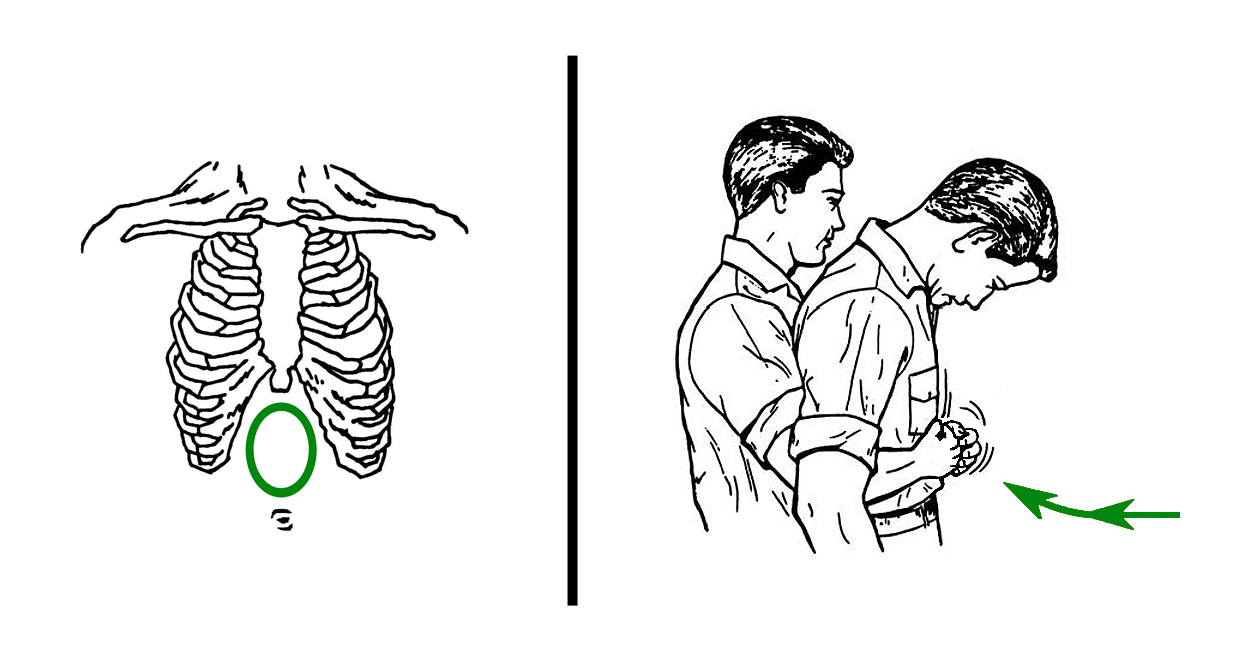
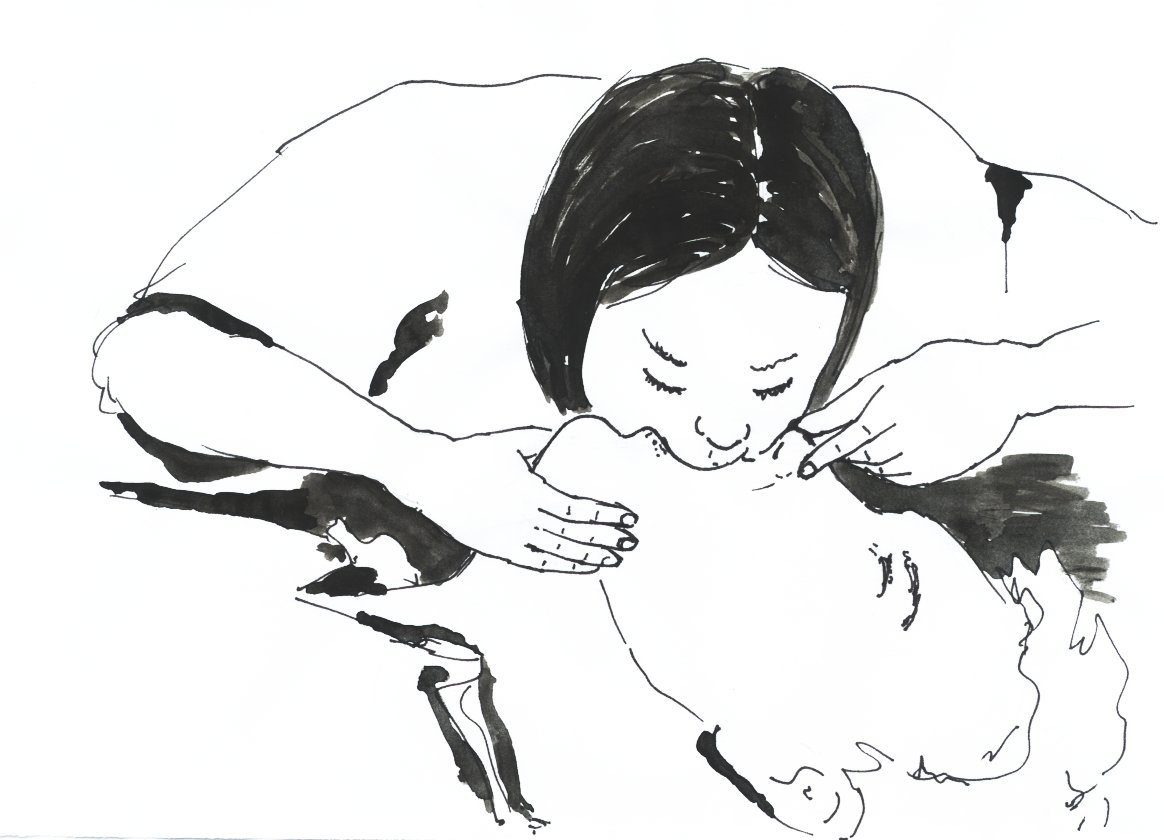
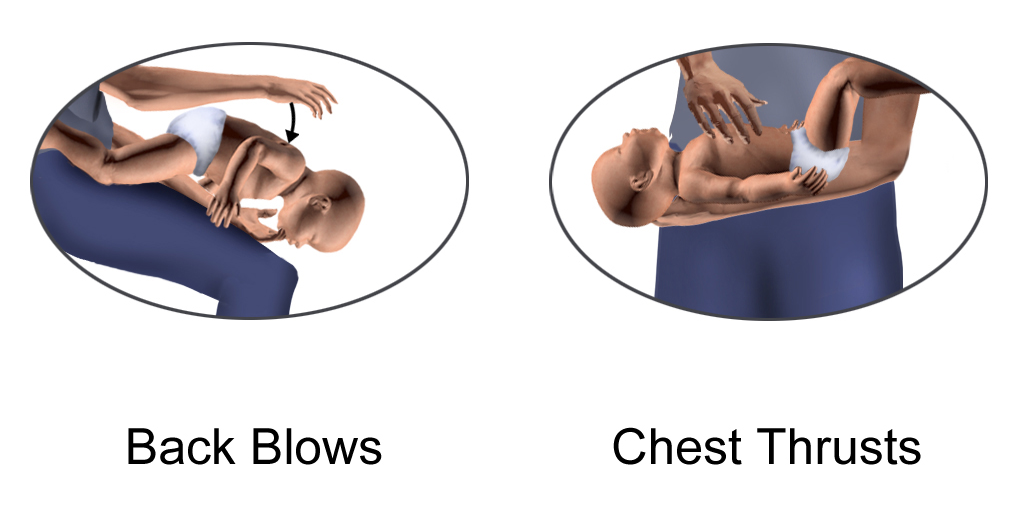
Immediate action can save a life. If the person is coughing effectively, encourage continued coughing. For a conscious adult with severe obstruction, current common approaches are alternating firm back blows with abdominal thrusts (the Heimlich maneuver). For pregnant or very large individuals, chest thrusts are recommended instead of abdominal thrusts. For infants under one year, use a sequence of five back blows followed by five chest thrusts using two fingers. If the victim becomes unconscious, begin basic life support: call emergency services, start cardiopulmonary resuscitation (CPR), and check the mouth for dislodged objects each time the airway is opened.
- Encourage coughing if effective; do not interfere.
- For conscious adults: back blows and abdominal or chest thrusts as appropriate.
- For infants: back blows and chest thrusts; do not perform abdominal thrusts.
- If unconscious: call emergency services, begin CPR, and inspect the airway.
Complications, follow-up and prevention
Even after clearing an airway, medical evaluation is advisable: complications can include airway injury, aspiration of material into the lungs, infection, or neurological damage from prolonged oxygen deprivation. Prevention focuses on safe eating practices, supervising young children, cutting food into small pieces, avoiding talking or laughing with a mouth full, and managing medical conditions that affect swallowing.
History and notable facts
The abdominal thrust technique widely associated with saving choking victims is often called the Heimlich maneuver after Dr. Henry Heimlich, who advocated it in the 1970s. Techniques and recommendations have evolved and vary by organization; formal training and up-to-date guidance from recognized bodies are recommended. For official protocols and detailed instructions, consult trained first-aid resources and your local emergency services: further guidance.
Author
AlegsaOnline.com Choking: causes, signs, first aid, and prevention Leandro Alegsa
URL: https://en.alegsaonline.com/art/136522