
Châteaubriant
Châteaubriant is a market town in Loire-Atlantique, Pays de la Loire, western France, noted for its medieval castle, historic centre and regional cultural role. Population ~12,000 (2017).
Châteaubriant is a commune in northwestern France with a population of about 11,974 people (2017). It serves as a local centre for trade and services in the surrounding rural area. Administratively the town lies in the Loire-Atlantique department and the larger region of Pays de la Loire, while it is often described geographically as part of western France. For administrative and statistical information one can consult the municipal and departmental resources linked to the town.
Image gallery
10 Images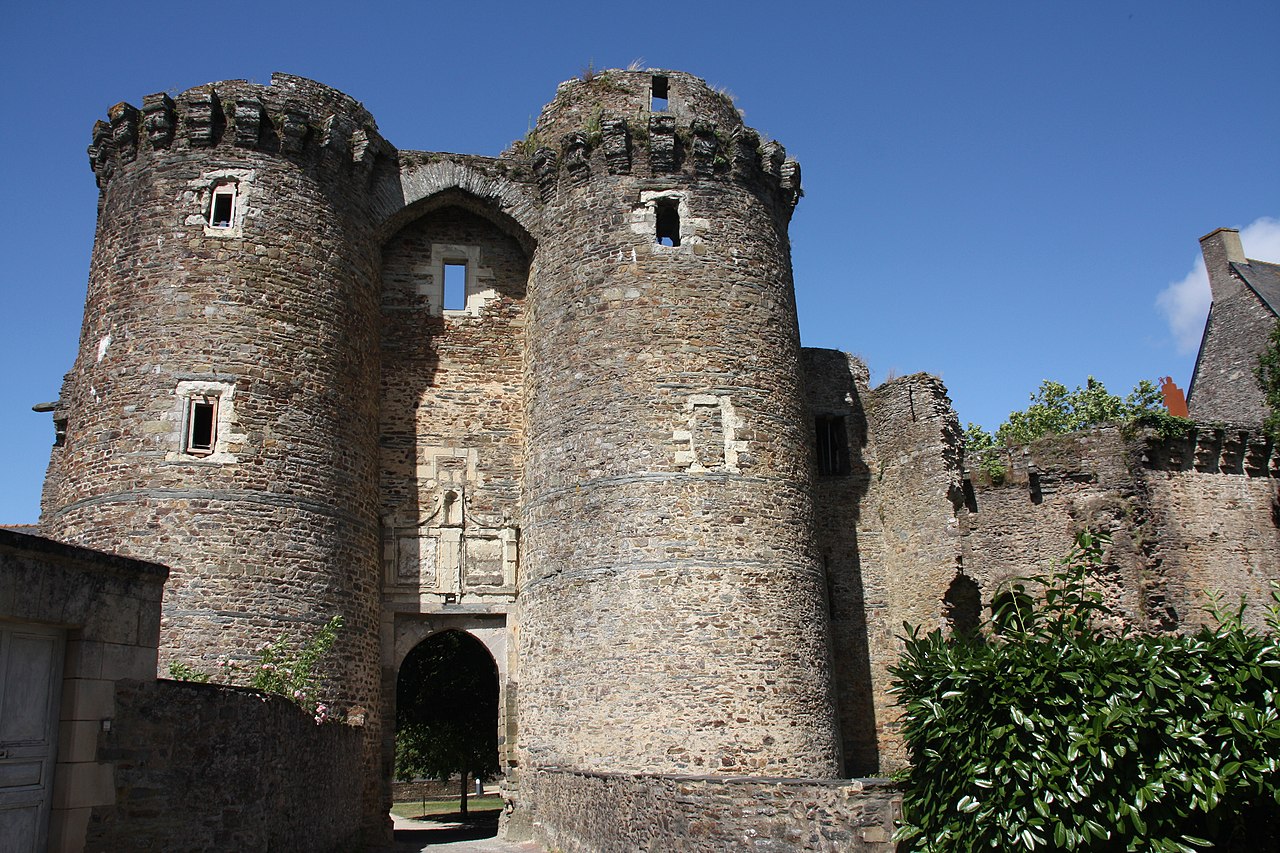


Character and landmarks
The town is most famous for its castle, a fortified complex with medieval origins and later Renaissance modifications that dominates the historic centre. The streets around the castle contain timber-framed houses, stone façades and a compact medieval street pattern that reflect centuries of urban development. Public buildings, market halls and parks contribute to a clearly defined town centre with cultural and commercial activity.
History and development
Châteaubriant grew up around its fortress in the Middle Ages and developed as a feudal and then a market town. Over the centuries it experienced typical regional shifts in administration and economy, including phases of agricultural trade, artisan production and more recently small-scale industry and services. Historic layers—fortifications, religious buildings and reconstructed houses—are visible in its urban fabric.
Economy, transport and culture
Today the town combines local commerce, public services and tourism. Transport links connect Châteaubriant with larger urban centres in the region and support daily commuting and market exchanges. It hosts cultural events, local markets and heritage activities that attract visitors interested in regional history and architecture.
Notable features
- Medieval castle at the town centre, a landmark of historic architecture.
- Historic centre with timber-framed and stone buildings.
- Market town role serving surrounding rural communities.
For administrative details and local services see the municipal portal and regional guides available through the town and departmental pages: municipal information, departmental resources. These sources provide practical information on visiting, local governance and cultural programming.
Author
AlegsaOnline.com Châteaubriant Leandro Alegsa
URL: https://en.alegsaonline.com/art/136306