
Cave-In-Rock, Illinois
Cave-In-Rock is a small riverside village in southern Illinois named for a large Ohio River bluff cave. Known for its geology, frontier-era history and a state park, it attracts visitors for outdoor recreation and folklore.
Overview
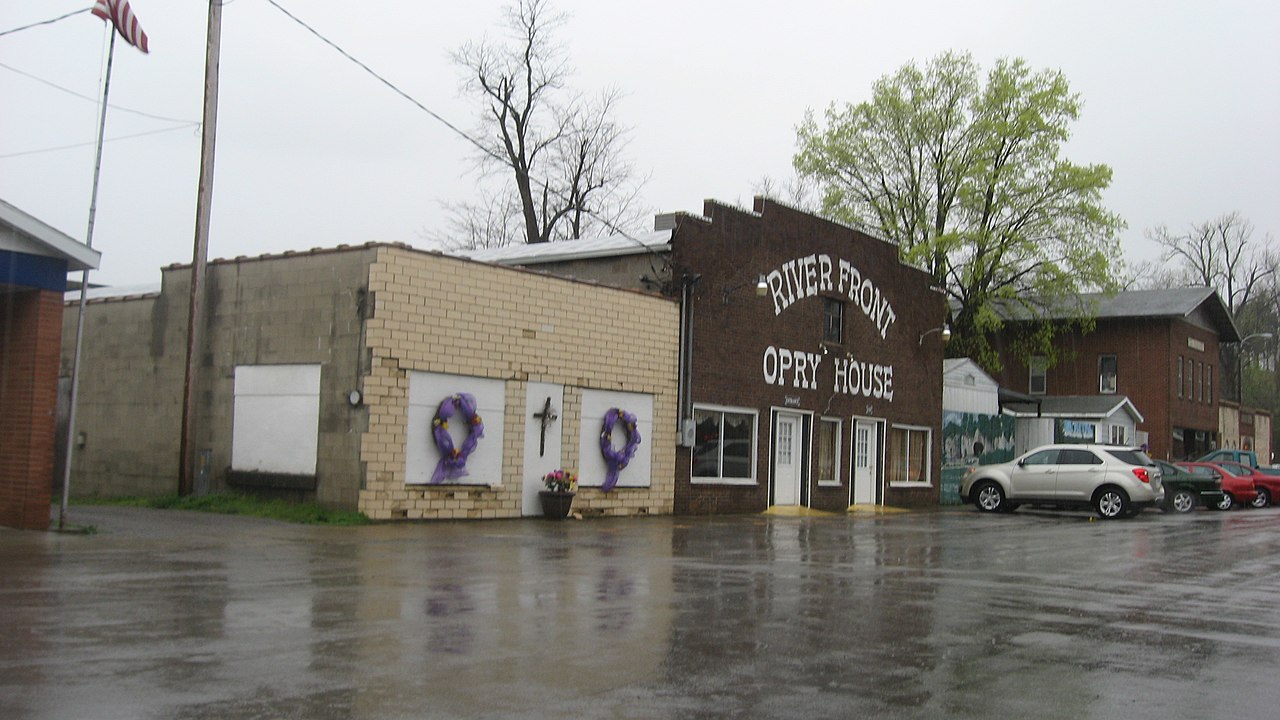
Cave-In-Rock is a small village located on the Ohio River in southern Illinois. The community takes its name from a prominent riverside cave that has been a landmark for centuries. The village and the cave occupy a visible place in regional history, geography and recreation within the broader United States river valley landscape.
Image gallery
5 Images


Geology and the cave
The cave itself is a recessed bluff opening carved into the riverbank by the action of the Ohio River on softer layers of rock. It is not a deep subterranean system like karst caves but rather a wide shelter in sandstone and shale formed by erosion. Its broad mouth and overhanging roof make it an easily recognized natural shelter and scenic feature along the river.
History and cultural role
Archaeological and historical accounts indicate the site was known to Indigenous peoples and later became notable in frontier times. In the late 18th and early 19th centuries the cave figured in stories of river traffic, outlaws and travelers, and it entered local folklore and travel accounts. Those episodes contributed to the area’s reputation and to later efforts to preserve the site.
State park, tourism and community
The cave and surrounding land are managed for public access and recreation as part of a state park unit. Visitors come for hiking, picnicking, river views, birdwatching and canoe or boat access to the Ohio River. The village that shares the cave’s name remains small, with an economy long tied to river transport and now supplemented by tourism and park-related services.
Notable facts and preservation
- The name Cave-In-Rock uniquely identifies both the natural feature and the nearby settlement.
- The site is valued for local history, scenic river vistas and educational interpretation of frontier and riverine life.
- Conservation and public safety measures help protect the cave and visitor access while preserving archaeological and historic resources.
For those researching or visiting the area, local interpretive signage and regional guides provide context about the cave’s formation, historical anecdotes and the village’s place in the Ohio River corridor.
Author
AlegsaOnline.com Cave-In-Rock, Illinois Leandro Alegsa
URL: https://en.alegsaonline.com/art/136251