
Amelia Court House, Virginia
County seat and small rural census-designated place in central Virginia, organized around a historic courthouse square; notable for local government services and Civil War‑era history related to the Appomattox campaign.
Overview
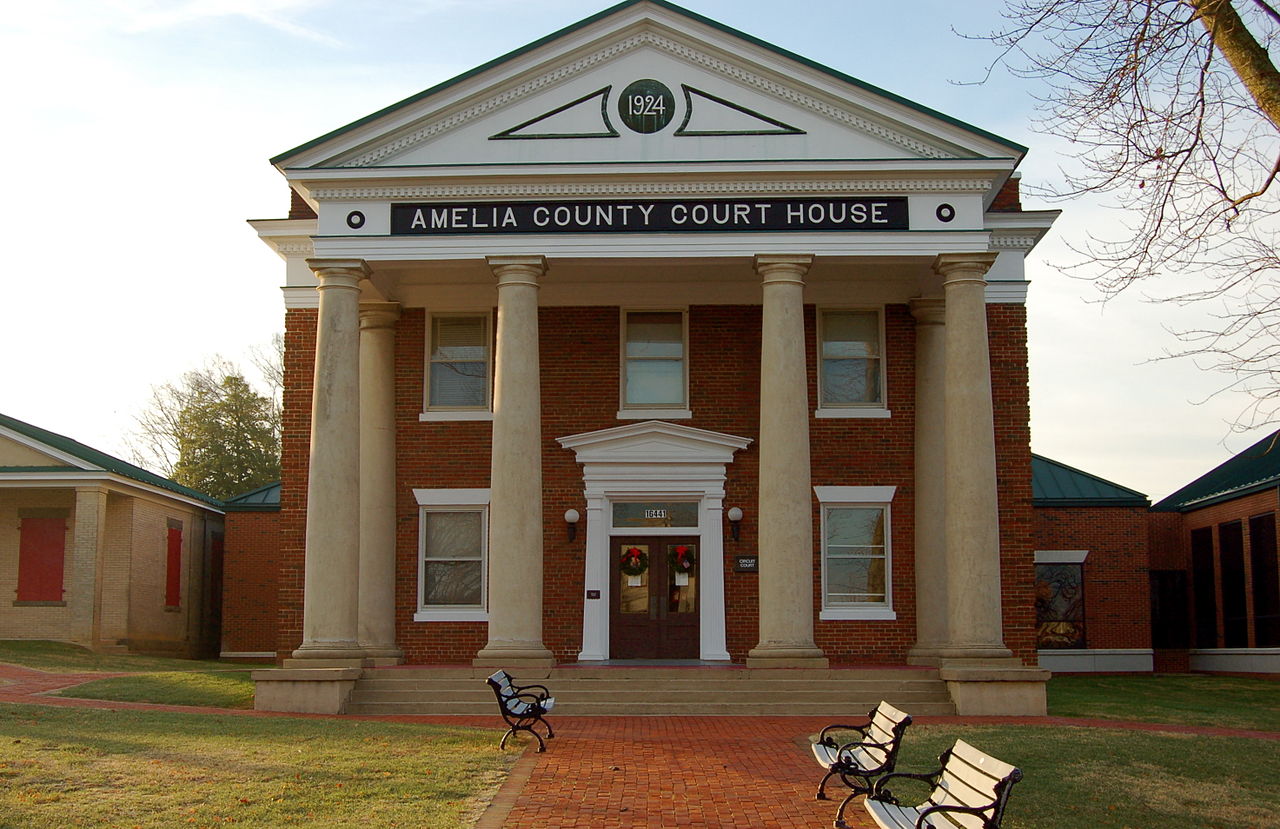
Amelia Court House is the county seat and principal settlement of Amelia County in the U.S. state of Virginia. It is a small, rural census‑designated place that functions as the administrative and civic center for the surrounding countryside. The community is organized around a courthouse complex and a modest commercial district that serves local residents and nearby farms.
Image gallery
2 Images
Community and economy
The settlement combines government, residential and agricultural uses. Typical features include the courthouse and county offices, a post office, churches, small businesses and historic houses. Local employment is dominated by county government, education and services that support agriculture and rural living. Community life includes civic meetings, volunteer organizations and seasonal events that reflect the traditions of a rural county seat.
History and heritage
Amelia Court House has long been centered on the courthouse square, a pattern common in Virginia where the county seat serves as the focal point of civic life. The area is associated with 19th‑century architecture and local historical records. In early April 1865, during the closing days of the American Civil War, actions around Amelia Court House were part of the Appomattox campaign and affected the movements of Confederate and Union forces. Because of that role the community and surrounding landscape are of interest to Civil War historians and visitors.
Facilities and visitor information
The town provides routine services such as court sessions, public records, and administrative offices for county residents. Visitors can consult local historical markers, county archives and small museums or interpretive sites in the region for context. Transportation to the community is by state and county roads; the settlement serves as a convenient point for exploring rural central Virginia and its historic sites.
Notable points
- It is the organized county seat distinct from the larger rural county area.
- Its courthouse square remains an important civic and historical focal point.
- Local archives, markers and community groups help preserve and interpret regional history.
Author
AlegsaOnline.com Amelia Court House, Virginia Leandro Alegsa
URL: https://en.alegsaonline.com/art/134409