
Allan Pinkerton: 19th‑Century Detective and Founder of the Pinkerton National Detective Agency
Allan J. Pinkerton (1819–1884) was a Scottish‑American detective who founded the Pinkerton National Detective Agency, influential in private investigation, security contracting and early American intelligence and policing.
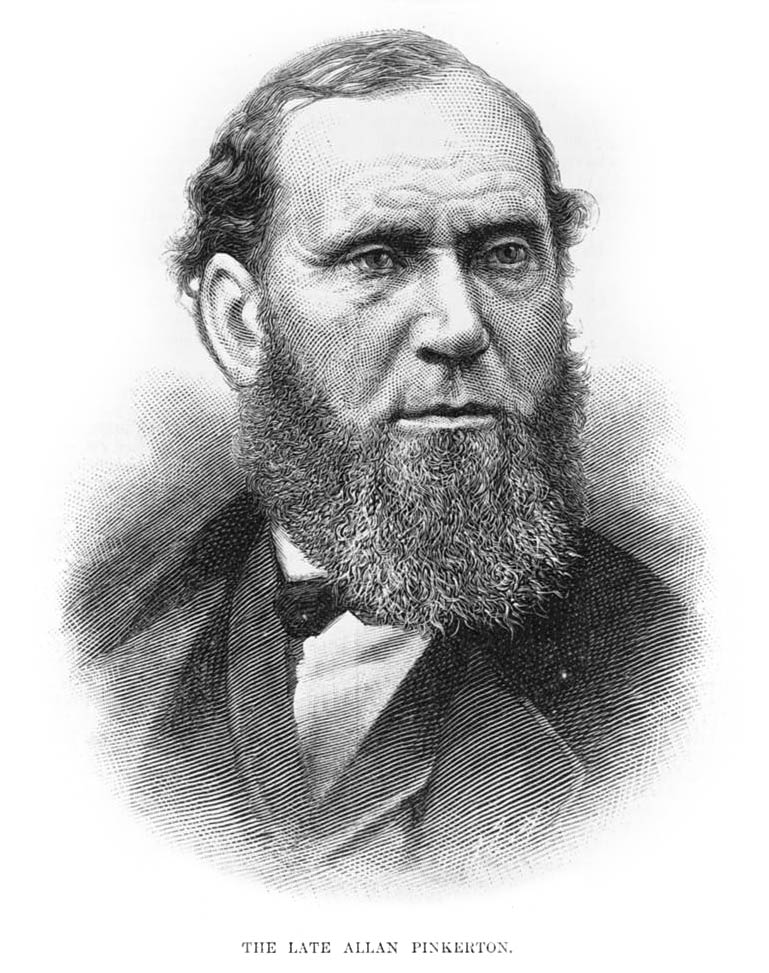
Allan J. Pinkerton (1819–1884) was a Scottish‑American investigator best known for founding the Pinkerton National Detective Agency and for helping to professionalize private investigation and security in the United States. His agency introduced systematic record keeping, coordinated networks of operatives and new forms of private contracting for railroads, insurers and other commercial clients. Over time the Pinkerton name became synonymous with private detective work and with contested practices in labor and public order.
Image gallery
5 Images


Early life and move into investigation
Pinkerton emigrated from Scotland to the United States as a young man and worked in a variety of trades before turning to law‑enforcement work. Drawing on practical skills and an ability to organize groups of informants and undercover operatives, he built a service that combined local inquiries with wider circulation of suspect descriptions and case files. This approach appealed to businesses and courts that sought investigative help beyond the resources of municipal police.
Organization, methods and services
The agency developed a central office that retained files and distributed alerts to regional agents. Pinkerton agents carried out criminal investigations, tracked fugitives, guarded transportation and cargo, and pursued cases of insurance fraud. His method emphasized surveillance, undercover work, evidence collection and fast communication between offices. Clients included private firms and occasional public authorities; the agency operated as a private contractor rather than as an arm of government.
Civil War era and the Baltimore episode
During the Civil War era Pinkerton and his operatives offered intelligence and protective services that brought them into contact with federal officials. He claimed to have uncovered a conspiracy to attack President‑elect Abraham Lincoln while the latter traveled to Washington for his inauguration—an episode commonly referred to as the Baltimore Plot. Accounts of Pinkerton’s role vary: he did provide guides, scouts and protective details, and his self‑reported accounts have been debated by historians. Regardless, the episode contributed to his contemporary reputation as a spy and intelligence organizer.
Controversies and public debate
As the agency grew it attracted criticism. Pinkerton operatives were employed by industrial employers in labor disputes and in anti‑union activity, a role that made the organization a lightning rod for criticism by workers and some public officials. Questions were raised about the legal and ethical limits of private policing, the use of armed agents in labor conflicts, and the balance between business imperatives and civil liberties. These controversies are central to how historians assess Pinkerton’s legacy.
Legacy and historical assessment
Pinkerton helped create a model of private investigation and security that influenced later national practices. The term detective and the image of the Pinkerton operative entered popular culture, while the agency’s files and methods informed subsequent developments in commercial security and investigative technique. Modern appraisal tends to be mixed: scholars recognize organizational innovation and professionalization, but also note persistent concerns about the uses of private force and surveillance.
- Main activities: criminal investigation, fugitive pursuit, security contracting and intelligence gathering.
- Reputation: influential innovator whose methods provoked public debate.
- Further topics: private policing, labor history, early American intelligence practice.
For concise introductions to these themes consult focused historical studies and primary‑source collections that examine both Pinkerton’s documented operations and the controversies they generated. See also discussions of detective services, spycraft and intelligence, the life of Abraham Lincoln and accounts of the Baltimore Plot.
Author
AlegsaOnline.com Allan Pinkerton: 19th‑Century Detective and Founder of the Pinkerton National Detective Agency Leandro Alegsa
URL: https://en.alegsaonline.com/art/134310