
8 Million Ways to Die (1986 film)
1986 American crime thriller directed by Hal Ashby, based on Lawrence Block's novel. Stars Jeff Bridges and features Andy Garcia and Rosanna Arquette; produced by Oliver Stone and distributed by TriStar Pictures.
Overview
8 Million Ways to Die is a 1986 American crime thriller directed by Hal Ashby and produced in part by Oliver Stone. The picture adapts the novel of the same name by Lawrence Block and centers on a down-and-out investigative figure drawn into a violent underworld. Released by TriStar Pictures, the film was part of a wave of 1980s projects that blended noir motifs with contemporary crime drama.
Image gallery
1 Image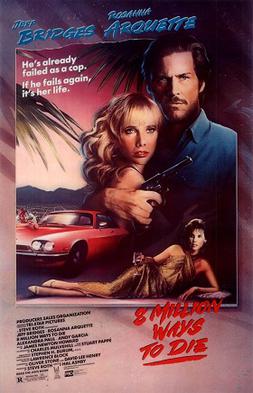
Cast and principal contributors
The movie features a cast led by Jeff Bridges, supported by actors including Andy Garcia, Rosanna Arquette, James Avery, Randy Brooks and Alexandra Paul. These performers portray a mix of lawmen, criminals and civilians whose relationships drive a story of corruption, addiction and moral reckoning.
- Director: Hal Ashby
- Based on: novel by Lawrence Block
- Distributor: TriStar Pictures
- Principal cast: Jeff Bridges, Andy Garcia, Rosanna Arquette, James Avery, Randy Brooks, Alexandra Paul
Adaptation and themes
The film translates Block's hardboiled source material to a cinematic format, focusing on personal decline, redemption and the consequences of crime. Like many adaptations, it condenses and alters elements of the original book to fit a feature-length structure. The narrative employs genre conventions—investigative perspective, moral ambiguity and urban danger—while foregrounding the protagonist's struggle.
Production and release
Produced during the mid-1980s, the picture brings together filmmakers and performers known for both mainstream and independent work. Hal Ashby's direction gave the film a distinct mood that drew on classic noir aesthetics updated for the era. Upon release, it attracted attention for its cast and its connection to Lawrence Block's popular literary character.
Reception and legacy
Critical response to the film was mixed; viewers and reviewers highlighted its performances and atmospheric elements while debating the effectiveness of the adaptation. Over time the movie has been noted by fans of crime fiction and by those interested in film versions of detective novels. It remains a reference point for discussions of 1980s neo-noir and for how complex literary protagonists are handled on screen.
For more information on contributors and context, see entries on the novel, the director's filmography and the careers of the principal actors.
Author
AlegsaOnline.com 8 Million Ways to Die (1986 film) Leandro Alegsa
URL: https://en.alegsaonline.com/art/133968