
The 50s (AD 50–59): Roman politics, early Christianity and global context
Overview of the decade AD 50–59: political shifts in Rome and Han China, early Christian expansion, trade networks, and distinctions from the 1950s.
The term "50s" commonly denotes the years AD 50–59 in the first century. This decade falls within the early Roman Empire and the Eastern Han dynasty, and it was a period of political transition, religious activity, and continued long‑distance trade across Eurasia. For the modern era, the phrase can also refer to the 1950s; this article treats the classical decade AD 50–59 and highlights the principal developments of that time.
Image gallery
1 Image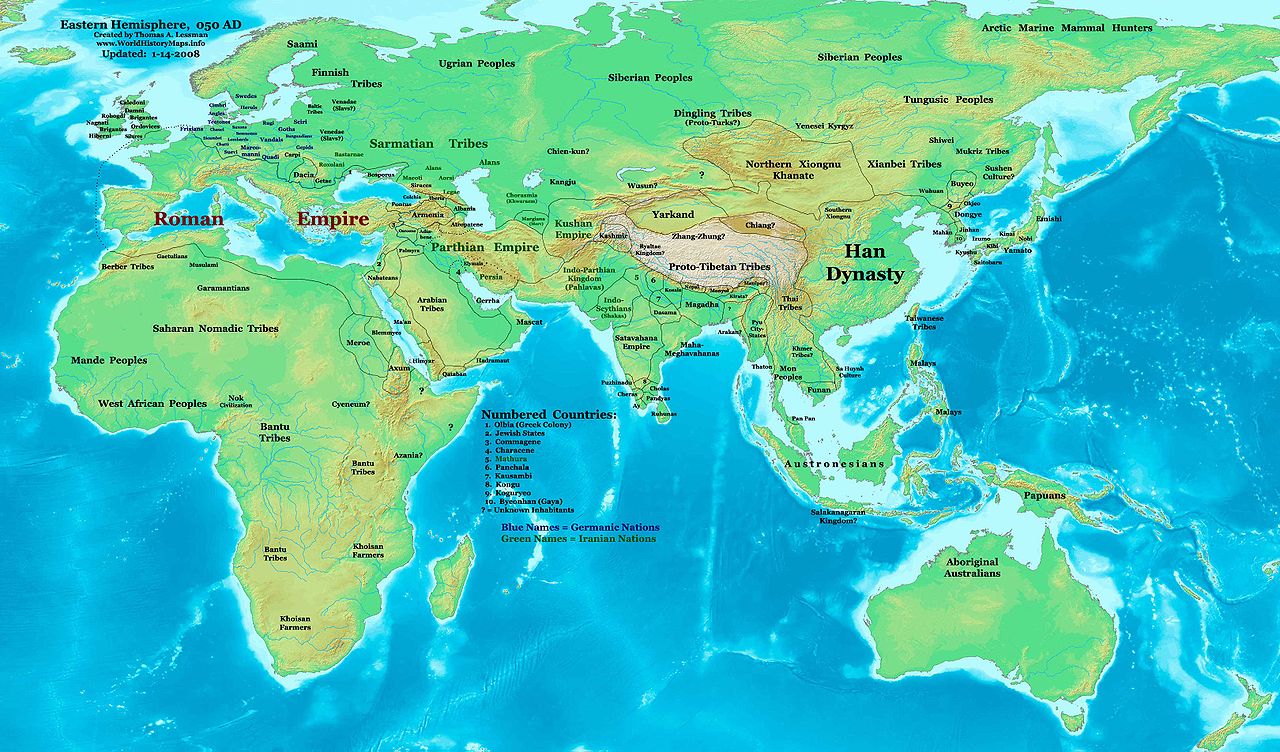
Political and administrative developments
The Roman Empire saw a notable change of leadership when Emperor Claudius died in AD 54 and was succeeded by Nero, whose accession shaped imperial policy and court life. Rome continued to administer a wide range of provinces from Hispania to Syria, relying on senatorial, equestrian, and military officials to maintain order. Frontier management, taxation, and the careers of provincial governors remained central concerns. In East Asia the Eastern Han court experienced a transition of emperors and ongoing consolidation of central authority.
Religion, ideas and society
Religious movements and philosophical schools were active. Early Christianity expanded through missionary journeys and the founding of communities across the eastern Mediterranean; several Pauline letters and other Christian texts are commonly dated to the middle of the first century. Judaism, Greco‑Roman cults, and mystery religions continued to coexist and interact in urban centers. Intellectual exchange within and between the Mediterranean and Asian worlds occurred along established routes.
Trade, culture and contacts
Long‑distance trade persisted: Mediterranean commerce, overland routes of the Silk Road, and maritime links connected goods, ideas, and peoples. Cities served as hubs for artisans, merchants, and administrators. Architecture, coinage, and inscriptions from the period reflect imperial patronage and local elites. In China, the Han dynasty maintained internal infrastructure and contacts with Central Asia that facilitated cultural and material exchanges.
Notable figures and themes
- Roman leaders: Emperor Claudius (died 54) and his successor Nero.
- Intellectuals and administrators: Senators, provincial governors, and philosophers who influenced public life.
- Religious actors: Christian missionaries and early community leaders active in the Mediterranean.
The decade is often studied as part of broader first‑century developments rather than for a single defining event. For readers wanting the other common meaning of "the 50s," see the cultural and geopolitical decade of the 1950s. For the classical years AD 50–59 in online chronologies, consult resources labeled 50s (AD 50–59) for timelines and primary sources.
Author
AlegsaOnline.com The 50s (AD 50–59): Roman politics, early Christianity and global context Leandro Alegsa
URL: https://en.alegsaonline.com/art/133927