
January 2021 Christian Democratic Union (CDU) leadership election
Internal CDU contest held at the party's 33rd Congress after AKK's resignation; delayed by COVID‑19 and decided in mid‑January 2021, producing a new party leader ahead of Germany's 2021 federal election.
Overview
The Christian Democratic Union (CDU) held its leadership election at the party's 33rd Congress after months of delay caused by the COVID‑19 pandemic. The contest, originally scheduled for April 2020 in Berlin, ultimately took place as a virtual and limited in‑person meeting in mid‑January 2021. It followed the announcement that Annegret Kramp‑Karrenbauer would step down as party chair, opening a competitive race to succeed her as head of the CDU (Christian Democratic Union).
Image gallery
5 Images


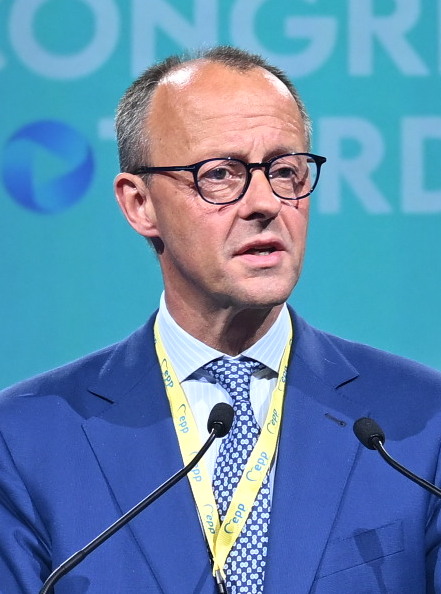
Background and context
Kramp‑Karrenbauer, who had succeeded Angela Merkel in 2018, announced her resignation amid internal criticism and the fallout from regional political crises. The leadership vacancy coincided with Merkel's decision not to seek another chancellorship, so the new CDU chair would have an important role in shaping the party's approach to the 2021 federal election. Health restrictions forced the party to postpone and redesign its congress several times before settling on dates in January 2021.
Principal candidates
- Armin Laschet — then Minister‑President of North Rhine‑Westphalia and CDU state chairman, representing a centrist, continuity‑oriented wing.
- Friedrich Merz — a conservative figure who previously led the CDU/CSU parliamentary group and campaigned on economic liberalism and a sharper opposition stance.
- Norbert Röttgen — former federal environment minister and chair of the Bundestag foreign affairs committee, emphasizing foreign policy and modernisation.
Congress format and voting
Because of the pandemic the CDU's 33rd Congress combined digital participation with a reduced number of delegates attending in person. The party used a multi‑round ballot to determine its leader when no candidate won an absolute majority on the first ballot. Delegates voted according to party rules, and the contest drew intense media attention as it would influence the CDU's strategy for the national election later in 2021.
Outcome and significance
In mid‑January 2021 the party elected Armin Laschet as CDU chair after a run‑off ballot. His victory made him the leading figure within the party and shaped subsequent discussions about the CDU/CSU's choice of chancellor candidate. The result highlighted ongoing tensions between different currents in the CDU — centrist, conservative, and policy‑focused wings — and influenced the party's positioning during the final months before the federal vote.
Notable facts
- The leadership race had been postponed multiple times: initially set for April 2020, briefly rescheduled for December 2020, and then held in January 2021 due to public‑health constraints.
- The congress exemplified how large political parties adapted internal decision‑making to pandemic conditions, relying on digital tools and modified delegate processes.
- The election was widely viewed as more than an internal party matter because it affected the broader balance of power in German federal politics and succession planning after Angela Merkel.
Author
AlegsaOnline.com January 2021 Christian Democratic Union (CDU) leadership election Leandro Alegsa
URL: https://en.alegsaonline.com/art/133776