
The 1450s: A Decade of Transition in Late Medieval and Early Modern History
Overview of the 1450s, a pivotal decade marked by the fall of Constantinople, the spread of printing, the end of the Hundred Years' War, and political and cultural shifts across Eurasia.
Overview
The 1450s were a compact but transformative decade that helped define the shift from medieval to early modern patterns of politics, warfare, culture and commerce. In Europe and beyond, new technologies, rising centralising states, and shifting trade networks began to reshape societies. A handful of closely spaced events — military, technological and diplomatic — produced consequences felt for centuries.
Image gallery
8 Images


Political and military developments
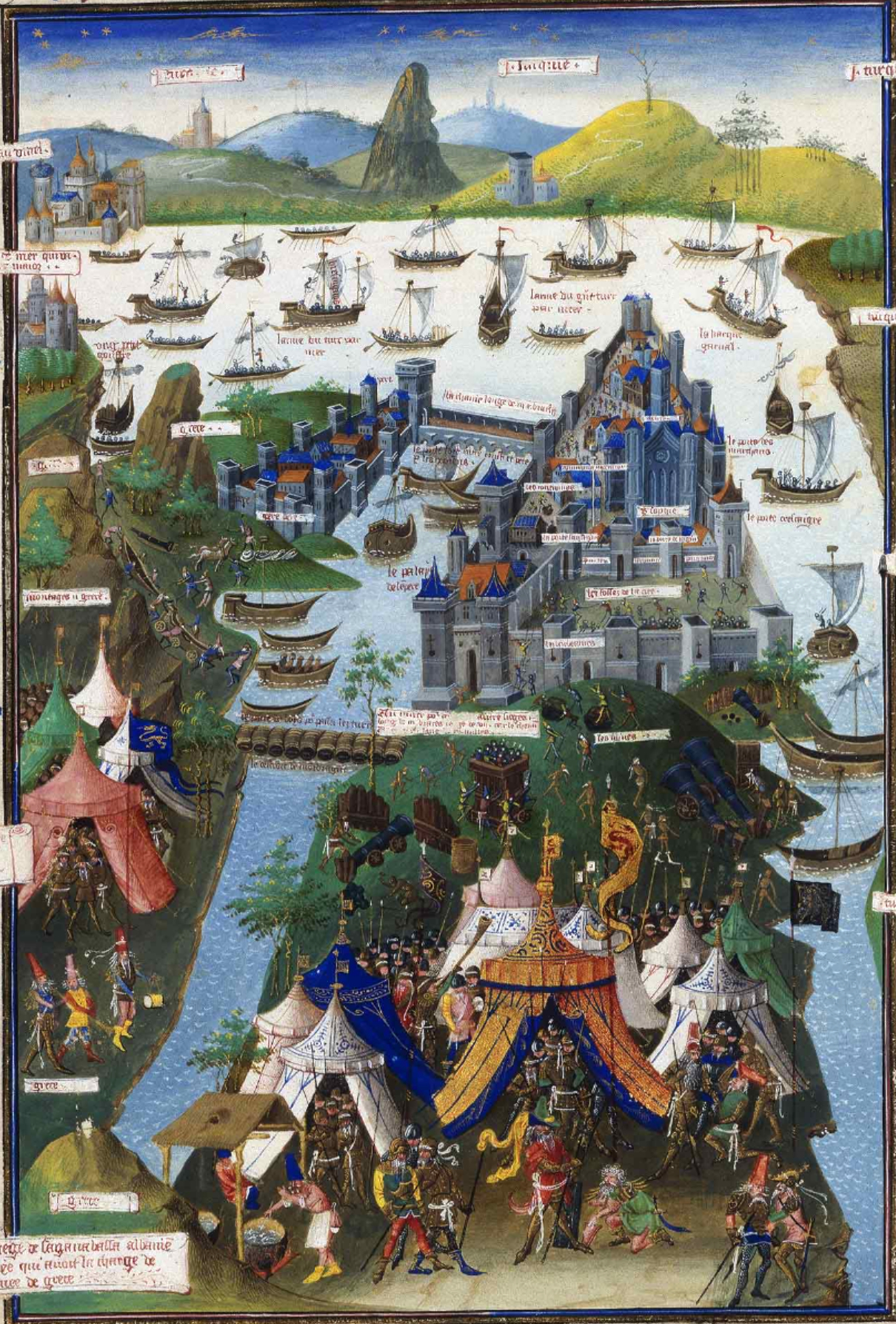
The decade saw the practical end of the Hundred Years' War and the opening phases of new dynastic conflicts. The English presence in France was reduced decisively in 1453, and in England domestic rivalries erupted into armed confrontation with the outbreak of the Wars of the Roses in 1455. In southeastern Europe the Ottoman state under Mehmed II seized Constantinople in 1453, securing control of the Bosporus and changing the balance of power in the Eastern Mediterranean. Armies increasingly employed gunpowder weapons and artillery, while professional infantry and organised logistics began to supplant feudal levies and the dominance of heavy cavalry.
Cultural and technological change
The decade coincided with the first wide use of movable type in western Europe. Printing made books and pamphlets more widely available, accelerating the spread of literacy, humanist ideas and administrative records. Italian cities continued to lead artistic and intellectual developments associated with the Renaissance, and patrons across Europe supported painters, architects and scholars. In parallel, maritime exploration, notably by Portuguese sailors along the West African coast, continued to expand long-distance trade and navigational knowledge.
Notable events and figures
- 1450s: The printing press begins to produce increasingly large runs of texts, including early printed Bibles by the mid-1450s.
- 1453: Fall of Constantinople to Ottoman forces under Mehmed II; also the year that marks the end of major English territorial claims in France.
- 1453: Battle of Castillon — often cited as the decisive action closing the Hundred Years' War.
- 1455: First Battle of St Albans and the onset of the Wars of the Roses in England.
Legacy and significance
The 1450s function as a hinge between eras. Disruptions to overland trade and Ottoman control of key routes encouraged investment in Atlantic navigation in later decades. The spread of printed books underpinned wider cultural exchange and later religious and intellectual movements. Politically and militarily, the consolidation of centralized authority and the adoption of gunpowder weapons set patterns that would shape the early modern world.
Author
AlegsaOnline.com The 1450s: A Decade of Transition in Late Medieval and Early Modern History Leandro Alegsa
URL: https://en.alegsaonline.com/art/133469