
Walter Scheel
German liberal politician (FDP), Vice-Chancellor and Foreign Minister (1969–1974) and President of the Federal Republic of Germany (1974–1979).
Walter Scheel (8 July 1919 – 24 August 2016) was a leading German politician of the Free Democratic Party (FDP). He played prominent roles in West German politics during the Cold War era, serving in senior government positions and representing a liberal, pro-Western, and pragmatic strand of post‑war German public life.
Image gallery
3 Images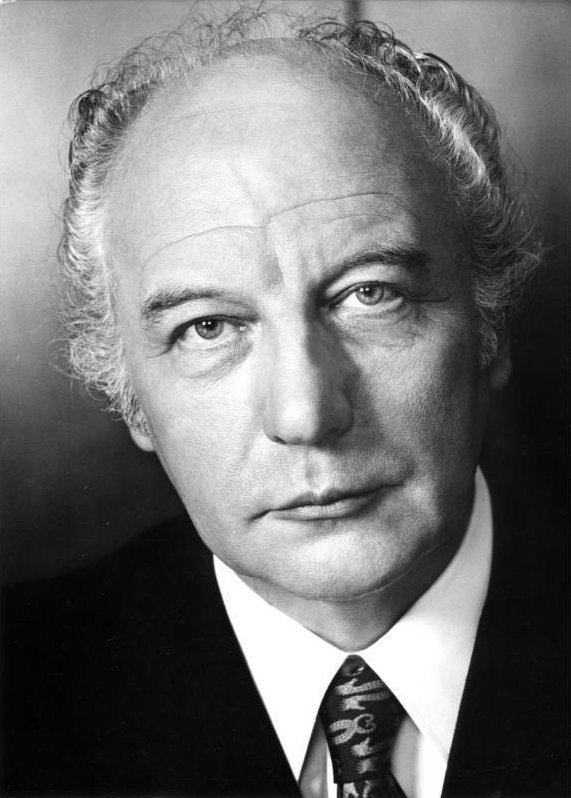
Political career and offices
Scheel rose through the FDP to become one of its most visible figures in the late 1960s and early 1970s. During the social-liberal coalition that brought Willy Brandt to the Chancellorship, Scheel held important executive responsibilities. His principal offices included:
- Vice-Chancellor of the Federal Republic of Germany (1969–1974)
- Federal Minister of Foreign Affairs (1969–1974)
- Federal President of the Federal Republic of Germany (1974–1979)
As Foreign Minister and Vice-Chancellor, Scheel supported the government’s policy of détente with Eastern Europe and contributed to the era of Ostpolitik aimed at reducing tensions across the Iron Curtain.
Presidency and public role
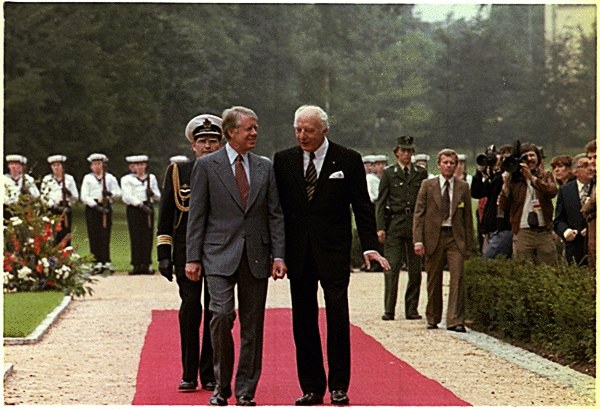
In 1974 Scheel was elected Federal President, a largely ceremonial but symbolically significant office in Germany’s parliamentary system. During his five-year term he emphasized democratic stability, reconciliation, and Germany’s role in Western institutions. His presidency followed that of Gustav Heinemann and preceded that of Karl Carstens.
Scheel’s political style combined liberal economic instincts with a diplomatic approach to foreign policy. He is remembered as a pragmatic centrist who worked to uphold constitutional norms and to broaden Germany’s international engagement during a period of geopolitical tension.
For an overview of his life and career see further resources.
Author
AlegsaOnline.com Walter Scheel Leandro Alegsa
URL: https://en.alegsaonline.com/art/132746