
Vladimir Zhirinovsky
Russian politician and lawyer, founder and long-time leader of the Liberal Democratic Party of Russia, known for nationalist rhetoric, military background and repeated presidential candidacies.
Vladimir Volfovich Zhirinovsky (born Vladimir Volfovich Eidelstein; 25 April 1946 – 6 April 2022) was a prominent and polarizing figure in post‑Soviet Russian politics. He combined a legal education and a career in the armed forces with a long tenure as leader of a major political party. His Russian name and spelling are often cited in Russian sources: Влади́мир Во́льфович Жирино́вский.
Image gallery
10 Images




Early life and military service
Zhirinovsky trained as a lawyer and served in the Soviet, and later Russian, military establishment, where he attained a senior rank. His military background informed part of his public persona and policy rhetoric; references to his service appear in many biographical sketches and official records about his military career.
Political career and public style
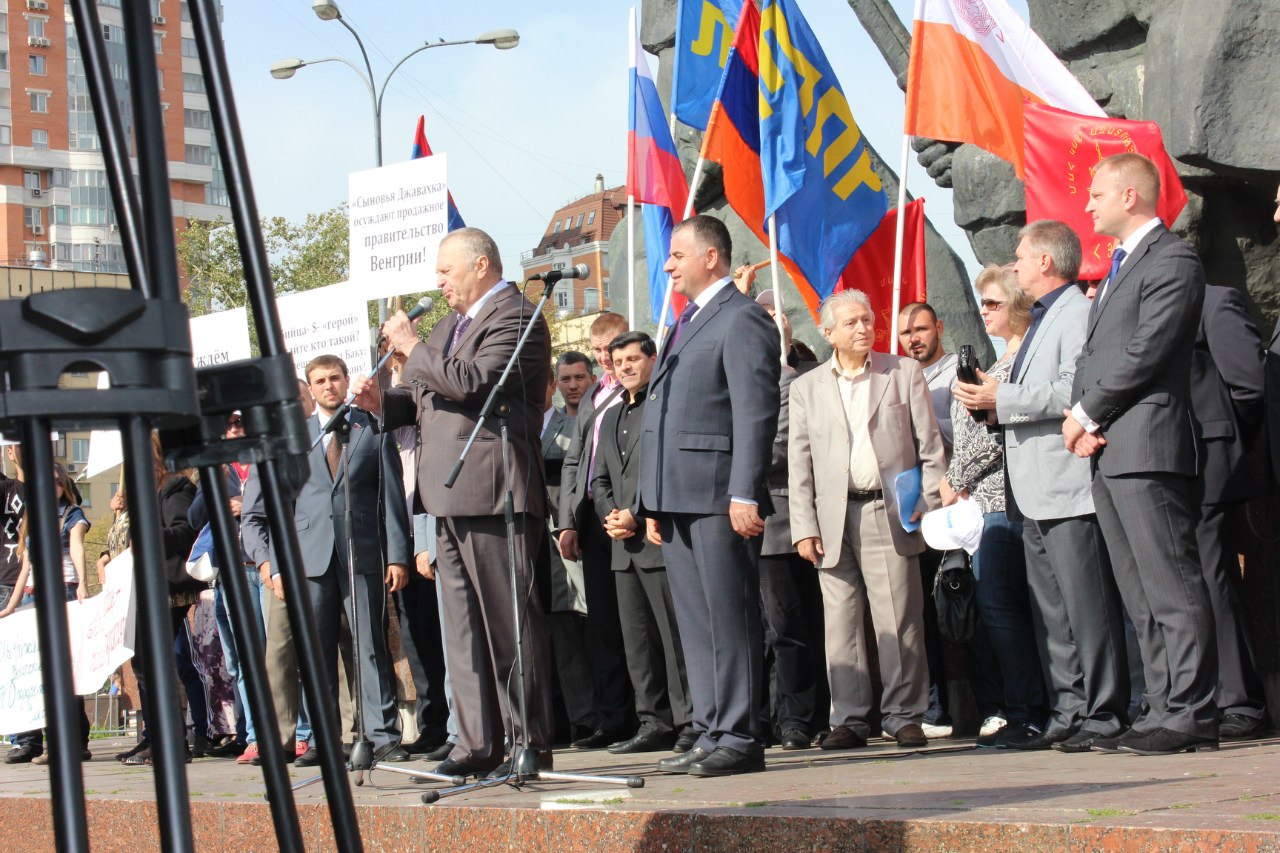
He was best known as the founder and long‑time leader of the Liberal Democratic Party of Russia (LDPR), a party that remained visible in national elections and in the State Duma for decades. Zhirinovsky was a frequent candidate in presidential contests and a consistent presence on television and in mass media. His style mixed populist, nationalist and provocative elements, often using theatrical statements to draw attention to issues or to rally supporters.
Positions, tactics and activity
- Advocated strong state power and assertive foreign policy positions.
- Used populist rhetoric to appeal to segments of the electorate outside mainstream liberal parties.
- Combined legislative work with high‑profile public speeches and media appearances.
Observers have characterized his movement as nationalist and populist; analysts debate how to place the party on standard left‑right spectra, but its durability in Russian politics is widely noted. The LDPR's public materials and some biographies reference his role and the party's program in more detail.
Legacy and controversies
Zhirinovsky remained a controversial and influential politician until his death in April 2022. Supporters praised his directness and defense of national interests; critics pointed to inflammatory statements and questioned the practical coherence of some policy proposals. His long public career left a recognizable imprint on Russia's political culture, notably in how theatrical personal style can shape party identity and media attention.
Author
AlegsaOnline.com Vladimir Zhirinovsky Leandro Alegsa
URL: https://en.alegsaonline.com/art/132670