
Vaira Vīķe-Freiberga
Latvian psychologist and stateswoman who served as Latvia's president (1999–2007), the country's first female head of state, and a leading advocate for NATO and EU accession.
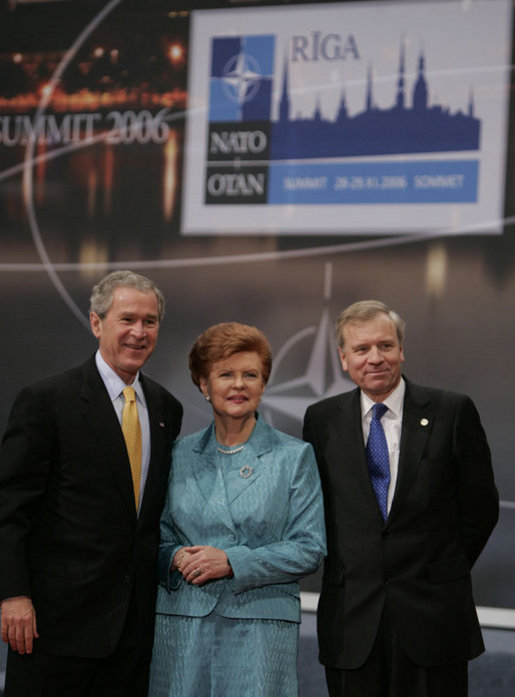
Vaira Vīķe-Freiberga (born 1 December 1937) is a Latvian-born psychologist, scholar and politician who served two terms as President of Latvia from 1999 to 2007. Widely credited with raising the profile of Latvia abroad after independence, she became the first woman to hold the Latvian presidency and played a visible role in the country's integration with Western institutions.
Image gallery
4 Images


Early life and academic background
Born in Latvia before World War II, Vīķe-Freiberga's early life was shaped by wartime displacement and emigration. She was educated and built a professional career in the West as a psychologist and academic, working in research and university settings. Her scholarship and experience in cultural and cognitive psychology informed her later public work on national identity and civic education.
Return to Latvia and rise to the presidency
After Latvia regained independence in the early 1990s, Vīķe-Freiberga returned to take part in public life. She was elected President of Latvia by the Saeima (the national parliament) in 1999 and re-elected in 2003. Her presidency emphasized democratic consolidation, historical memory, language and education policies, and efforts to strengthen Latvia's institutions after decades of Soviet rule.
Domestic priorities and international role
Domestically, Vīķe-Freiberga sought to promote civic cohesion, respect for human rights and the rule of law. On the international stage she was a vocal advocate of Latvia's integration into NATO and the European Union; Latvia joined both organizations in 2004 during her tenure. Her diplomatic style blended scholarly authority with a clear pro-Western orientation, and she used moral appeals about historical experience to make the case for security and partnership.
Legacy and notable facts
- First female President of Latvia and one of the country's most internationally visible leaders.
- Presidency coincided with Latvia's accession to NATO and the EU in 2004.
- Often praised for strengthening Latvia's international reputation and for emphasizing education, culture and historical memory.
For an official overview of her presidency see official presidential biography, and for a concise profile and timeline consult further background. She left office in 2007 and has since remained an influential figure in discussions about democracy, security and Baltic history.
Author
AlegsaOnline.com Vaira Vīķe-Freiberga Leandro Alegsa
URL: https://en.alegsaonline.com/art/132420