
Trent Lott
Chester Trent Lott Sr. (born 1941) is an American politician from Mississippi who served in the U.S. House and Senate, led Senate Republicans as Majority Leader, and resigned from leadership after a 2002 controversy.
Chester Trent Lott, Sr. (born October 9, 1941) is an American public figure who represented Mississippi in both chambers of the United States Congress. A prominent Republican leader in the Senate, Lott achieved one of the chamber's top posts before stepping down from party leadership following public criticism of remarks he made praising a 1948 segregationist presidential bid. He remains a notable and controversial figure in late-20th and early-21st century American politics.
Image gallery
7 Images
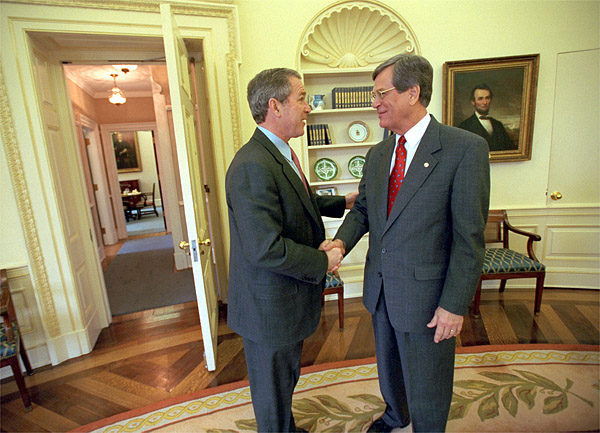


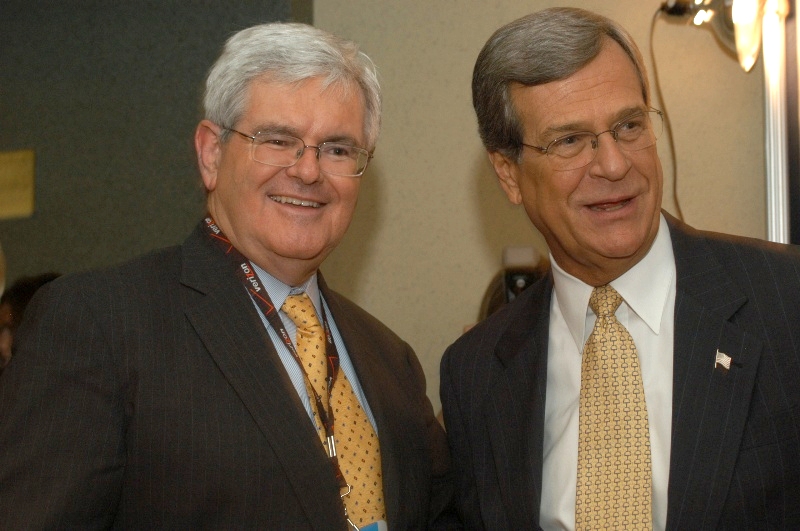


Career and political roles
Lott began a long career in national politics by winning election to the United States House of Representatives, later moving to the Senate where he represented his home state as a United States Senator from Mississippi. During his time in the Senate he rose through committee assignments and party ranks to become Senate Majority Leader and one of the principal spokespeople for Senate Republicans. His style combined institutional knowledge with efforts to coordinate party strategy in the chamber.
Controversy and resignation from leadership
In an appearance that drew extensive media and political scrutiny, Lott praised the 1948 presidential campaign of Strom Thurmond, a segregationist at the time. Those remarks were widely condemned for appearing to endorse a segregationist stance, prompting bipartisan calls for accountability. The episode led to Lott's resignation from his leadership post and marked a turning point in his career, altering his national leadership role and public reputation.
Political stance, influence, and later work
Lott was identified with conservative positions on fiscal, defense, and social issues and worked to build legislative coalitions within his party. He played a part in shaping congressional strategy during periods when Republicans controlled the Senate. After leaving the Senate, Lott remained active in public affairs through advisory, consulting, and advocacy roles, and he continued to be consulted on political and policy matters.
Notable facts and legacy
- Born in 1941, Lott's career spanned both the House and Senate and included a period as Senate Majority Leader.
- His public praise of Thurmond's 1948 campaign produced a high-profile controversy that cost him his leadership position.
- Lott's trajectory illustrates tensions in modern southern politics, party realignment, and the ways personal remarks can affect political careers.
- For further biographical information and records of his legislative work, consult official congressional biographies and archival materials (biographical overview).
Author
AlegsaOnline.com Trent Lott Leandro Alegsa
URL: https://en.alegsaonline.com/art/132274