
Shirley Ann Jackson — Physicist, Academic Leader, and Science-Policy Figure
American physicist and leader known for breaking barriers at MIT, contributions at Bell Labs, public service including the U.S. Nuclear Regulatory Commission, and long academic leadership at Rensselaer.
Overview
Shirley Ann Jackson (born August 5, 1946) is an American physicist whose career spans research, industry, government service and higher education leadership. She is widely cited for breaking racial and gender barriers in science and for a long record of work at the intersection of technical research and public policy. For a concise biography see biographical resources.
Image gallery
2 Images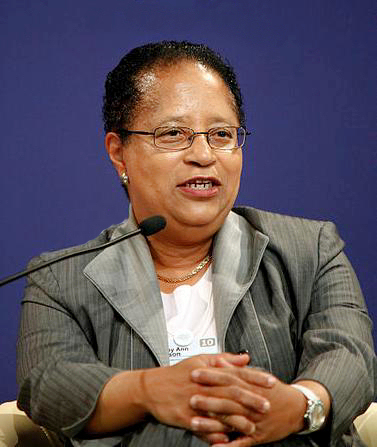

Education and early research
Jackson completed undergraduate studies in physics before earning a doctoral degree in 1973; she is often noted as the first African-American woman to receive a doctorate from the Massachusetts Institute of Technology. Her doctoral training focused on nuclear physics, and her early professional years included theoretical and applied work that connected fundamental physics to problems in materials and information technology. For details about her academic background consult academic profiles.
Industry and government roles
After graduate school Jackson joined industrial research, including a substantial tenure at Bell Laboratories where she worked on problems related to telecommunications and condensed-matter physics. Later she moved into public service, including a leadership role at the U.S. Nuclear Regulatory Commission, where she helped shape regulatory and safety policy. Several summaries of her professional appointments are available at professional listings.
Academic leadership and influence
Beginning in the late 1990s, Jackson assumed the presidency of a major technological university, where she focused on research growth, fundraising, and broadening participation in STEM. Her tenure combined campus development with national advocacy for science and engineering education. For institutional records and initiatives see institutional sources.
Honors and legacy
Jackson has received numerous honors recognizing scientific achievement and public-service leadership, including coverage in science magazines and prestigious awards for lifetime contributions to research and policy. Her career is frequently cited in discussions of diversity in science, the role of research in industry, and the translation of technical expertise into public policy.
Selected roles and notable facts
- Early researcher in theoretical and applied physics.
- Longstanding leadership in university administration and fundraising.
- Service in federal regulatory and advisory capacities related to nuclear safety and science policy.
- Recognition for advancing opportunities for underrepresented groups in STEM.
Author
AlegsaOnline.com Shirley Ann Jackson — Physicist, Academic Leader, and Science-Policy Figure Leandro Alegsa
URL: https://en.alegsaonline.com/art/130863