
Romesh Chandra
Indian communist leader (1919–2016), long-time member of the Communist Party of India and international peace activist who served as president of the World Peace Council.
Overview
Romesh Chandra (30 March 1919 – 4 July 2016) was an Indian political activist and a prominent figure in the country's left-wing and international peace movements. He was a lifelong member of the Communist Party of India and later became a leading voice in global campaigns for disarmament and peaceful resolution of conflict, serving as president of the World Peace Council from 1977.
Image gallery
1 Image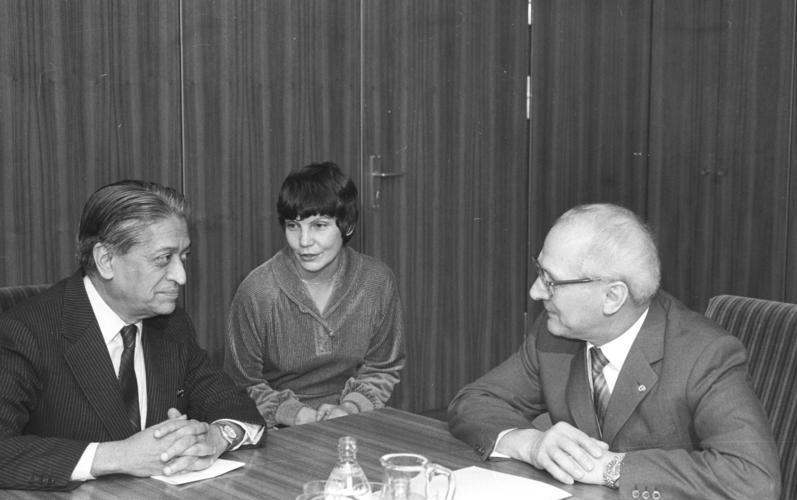
Early life and political beginnings
Born in 1919, Chandra came of age during the final decades of British colonial rule in India. As a student he became involved in anti-colonial politics and joined the Communist Party of India in 1939. His early activism combined student politics with participation in mass movements that sought Indian independence and social reform.
Role within the Communist Party
Over several decades Chandra held a series of organizational and leadership posts within the party at both state and national levels. He worked on political education, trade union solidarity, and campaigns that linked labour and peasant concerns with broader democratic and social rights. Colleagues regarded him as a committed cadre who helped sustain party activities through turbulent periods of Indian political life.
International work and the World Peace Council
Chandra became increasingly involved in international peace activism from the 1950s onward, representing Indian left and peace groups at conferences and forums. In 1977 he was elected president of the World Peace Council, an international organization that brought together activists and public figures advocating nuclear disarmament, anti-imperialism and negotiated settlement of international disputes. In that role he participated in diplomatic exchanges and public campaigns that connected peace movements across regions.
Ideology, influence and legacy
Identifying with Marxist principles and anti-colonial nationalism, Chandra combined political organizing with a persistent public emphasis on peace and fraternity among nations. His long career made him a familiar presence in Indian left politics and in transnational peace networks. He is remembered for bridging domestic political work with global advocacy and for his decades-long commitment to causes of labour, social justice and disarmament.
Notable positions
- Member and leader within the Communist Party of India.
- Representative of Indian peace groups at international forums.
- President of the World Peace Council (elected 1977).
- Longstanding public advocate for disarmament and negotiated peace (further profile).
Author
AlegsaOnline.com Romesh Chandra Leandro Alegsa
URL: https://en.alegsaonline.com/art/129996