
Roman Vishniac — photographer of Jewish life and pioneer of photomicroscopy
Roman Vishniac (1897–1990), a Russian-born American photographer and biologist, documented Jewish communities of Central and Eastern Europe before WWII and developed influential techniques in biological imaging.
Roman Vishniac (August 19, 1897 – January 22, 1990) was a Russian-born, later American photographer and scientist whose work spans documentary photography and photomicroscopy. He is best known for his photographic record of Jewish daily life in Central and Eastern Europe in the 1930s, images that have become central to cultural memory of communities largely destroyed during the Holocaust. Vishniac’s images were widely reproduced in exhibitions and in the volume A Vanished World, published late in his life.
Image gallery
10 Images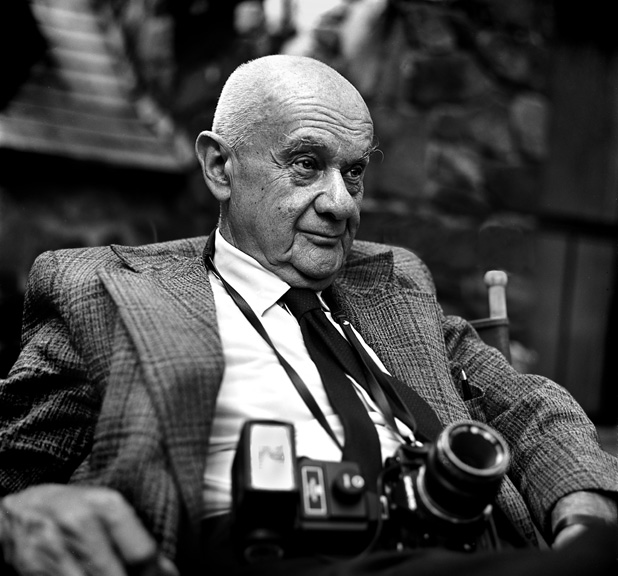





Life and career
Born in the Russian Empire, Vishniac lived and worked in several European cities before emigrating to the United States. In North America he combined photographic practice with scientific interests, applying camera techniques to the study of living cells and small organisms. Over decades he produced still photographs, microphotographs and motion studies used in teaching and research. His dual identity as a documentarian and a researcher shaped both the subjects he chose and the methods he taught to others.
Documentary photography: subjects and approach
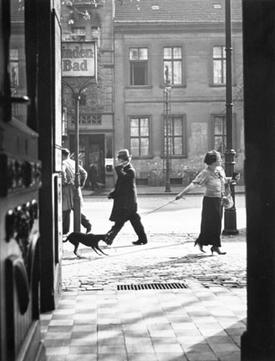
Vishniac’s documentary work from the mid-1930s focuses on everyday life, religious ritual, markets, work, and family scenes in Jewish neighborhoods of towns and cities across Central and Eastern Europe. He favored close, empathetic portraits and scenes that emphasize human presence and material culture. Many prints and negatives entered museum collections and were used to illustrate articles, books and exhibitions about European Jewish history. Curators and educators have frequently relied on these photographs to convey social and cultural detail from a vanished world.
Scientific photography and imaging
Alongside his documentary practice, Vishniac developed photographic techniques for biological research. He specialized in photomicroscopy and time-lapse imaging of living cells and small organisms, creating photographs and films that reveal cellular behavior, development, and movement. His work influenced visual methods in biology and medical education and he published and lectured about the technical approaches that make living processes visible through photography.
Legacy, collections and debate
Vishniac’s photographs remain important historical documents and are held in public and private archives. Institutions exhibit his prints to illustrate Jewish cultural life before the Second World War and to discuss memory, loss and representation. In recent decades scholars and curators have also examined how documentary practices, captioning, and later curatorial choices affect interpretation of his images. These discussions have prompted careful reappraisal of provenance, context and the ways photographs are used in historical narratives.
- Dual practice: notable both for humanist street and community photography and for pioneering biological imaging.
- Best-known publication: A Vanished World, a widely cited collection of his European photographs.
- Archive access: large groups of his negatives and prints have been conserved and made available to researchers and the public, informing exhibitions and scholarship.
- Continuing study: his work is a subject of ongoing academic and curatorial inquiry, especially about photographic ethics, context, and representation.
For biographical outlines, photographic catalogs, and scientific summaries, consult major museum and archival resources or specialized literature on 20th-century documentary photography and the history of scientific imaging. Additional curated materials and collections provide further images and commentary about Vishniac’s life and work: see biographical entries and institutional pages for more details on his photographic and scientific legacy (biography, photography collections, exhibition information, scientific contributions).
Author
AlegsaOnline.com Roman Vishniac — photographer of Jewish life and pioneer of photomicroscopy Leandro Alegsa
URL: https://en.alegsaonline.com/art/129989