
Robert Ryman (1930–2019)
American painter Robert Ryman is best known for white-on-white abstractions and his sustained inquiry into surface, light, and materials within minimal and conceptual practices.
Overview
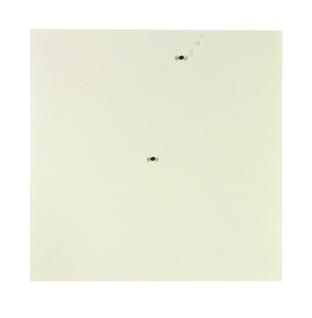
Robert Ryman was an American painter whose work focused on near-monochrome surfaces and the subtle effects of light, texture, and edge. Born in 1930 and based for much of his career in New York City, Ryman became widely known for paintings that used white paint as a primary subject rather than as a mere background. He died in New York on February 8, 2019.
Image gallery
2 Images
Characteristics of the Work
Although often described as part of the monochrome tradition, Ryman rejected purely optical or decorative readings and presented each work as an investigation of painting’s basic elements. Typical features include:
- Predominant use of white and off-white tones to emphasize surface and shadow.
- Attention to the edges where paint meets support, revealing joinery, tape, or bare material.
- Variation in brushwork, impasto, and layering to create a range of textures within a limited palette.
- Titles that are often minimal or absent, with many works simply labeled "Untitled."
Materials and Technique
Ryman experimented with a variety of supports — canvas, paper, metal, linen, board and custom stretcher systems — and with different grounds and binders. Rather than concealing working methods, he made decisions about mounting and framing part of the work’s visual language. The modulation of light across paint and substrate was a central concern: the same white paint might appear different depending on angle, texture, and ambient illumination.
Context, Movements and Influence
Ryman is often associated with minimalism and conceptual art, but his practice resists simple categorization. Where minimalism emphasized reduction and objecthood, and conceptual art emphasized ideas over craft, Ryman’s paintings insist on the phenomenology of seeing — how materials and making are inseparable from perception. Over decades he exhibited internationally and influenced artists concerned with process, materiality, and the limits of painting.
Legacy and Notable Facts
Ryman’s work is frequently discussed in studies of postwar abstraction for its rigorous discipline and its paradoxical richness: a seemingly simple palette opens onto complex visual and physical concerns. Museums and galleries have organized retrospectives and exhibitions that frame his paintings as investigations into what painting can be, rather than as demonstrations of color or composition alone. His commitment to exploring fundamentals continues to be cited by artists and critics interested in the intersection of technique, perception, and concept.
Further reading
For introductions to Ryman’s work and its place in 20th-century art, see museum overviews and exhibition catalogues that document his methods and the variety of supports he used. These resources can help viewers look closely at how minimal means yield maximal attention to the act of painting.
Author
AlegsaOnline.com Robert Ryman (1930–2019) Leandro Alegsa
URL: https://en.alegsaonline.com/art/129817