
Robert II of Scotland (1316–1390) — First Stewart King
Robert II (1316–1390), called Robert the Steward, was King of Scotland from 1371 to 1390 and founder of the House of Stewart; his reign fixed a new royal dynasty and raised questions of succession and governance.
Overview
Robert II (2 March 1316 – 19 April 1390) was the first monarch of the House of Stewart (later Stuart) and reigned as King of Scots from 1371 until his death in 1390. Widely known by the epithet "the Steward" before his accession, he became king after the death of his cousin David II, bringing to the throne a family whose name would dominate Scottish—and later British—politics for centuries.
Image gallery
10 Images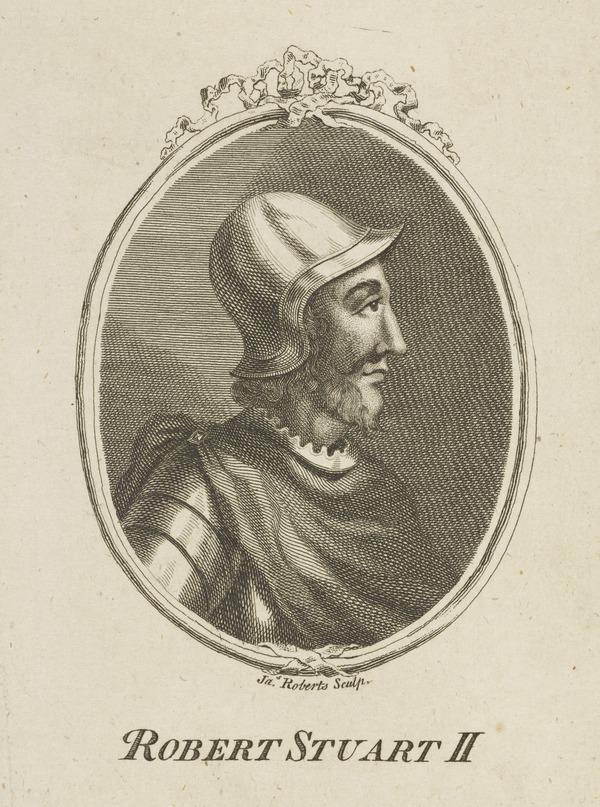



Origins and early life
Robert was the son of Walter Stewart, High Steward of Scotland, and Marjorie Bruce, eldest daughter of Robert I (Robert the Bruce). Through his mother he had a direct link to the Bruce dynasty; through his father he inherited the hereditary office of High Steward, from which his family name originated. During the years before his accession he was an important nobleman and a key figure in the politics of post‑Wars of Independence Scotland.
Accession and coronation
When David II died without legitimate heirs in 1371, Robert’s position as the senior surviving descendant of Robert the Bruce made him the leading candidate for the crown. He was crowned at Scone in March 1371. His succession established the Stewart line on the Scottish throne and marked a dynastic shift from the male line of the Bruces to the descendants of Robert I’s daughter.
Reign and government
Robert II’s reign was long but uneven. He was already elderly when he became king and increasingly delegated royal responsibilities to his sons and leading magnates. The period saw continuing disputes among powerful noble families, occasional lawlessness in remote districts, and tensions arising from questions of legitimacy among his children by his first marriage. Foreign policy was calmer than in earlier decades, though border raids and negotiations with England continued to shape royal priorities.
Family and succession
Robert’s marriages and the status of his children affected the succession. His first marriage, to Elizabeth Mure, produced several children including the future Robert III. That marriage was at first treated as irregular and later regularized, and the children's rights were confirmed by papal dispensation and parliamentary acts. A later marriage to Euphemia de Ross produced further children. In practice Robert relied heavily on his sons to administer regions of the kingdom; this concentration of power in the hands of princes contributed to factional rivalries.
Legacy and significance
Robert II is principally remembered as the founder of the Stewart dynasty, which provided Scotland with a long line of monarchs and later supplied the English throne after 1603. His reign did not produce dramatic reforms or great military victories, but it established the lineage and political framework that shaped late medieval Scotland. Historians view him as a transitional figure whose personal authority was limited by age and by the ambitions of powerful kin.
Notable facts
- He was the first Stewart king, giving his family name lasting royal prominence.
- His claim came through both the stewardship office and descent from Robert the Bruce’s daughter.
- Questions about the legitimacy of some children led to papal and parliamentary measures to secure succession.
- His eldest surviving son succeeded him as Robert III, continuing the Stewart line.
Author
AlegsaOnline.com Robert II of Scotland (1316–1390) — First Stewart King Leandro Alegsa
URL: https://en.alegsaonline.com/art/129762