
Richard Pipes
Polish-American historian of Russia and the Soviet Union, professor and anti-communist intellectual who led the 1976 Team B assessment and influenced Cold War policy debates.
Overview
Richard Edgar Pipes (July 11, 1923 – May 17, 2018) was a Polish-American historian best known for his scholarship on Russian history and his outspoken critique of Soviet communism. Over a long academic career he combined archival research, intellectual history and political commentary to assess the origins, nature and goals of the Soviet system. Pipes's views were strongly anti-communist and he played a visible role in public debates about American policy toward the USSR during the Cold War.
Image gallery
2 Images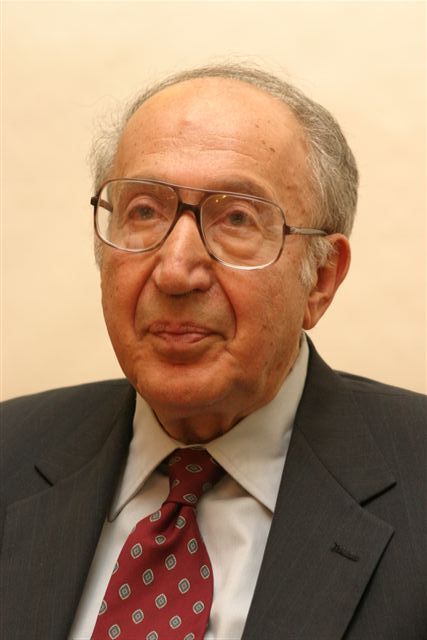

Career, themes and approach
Pipes trained and taught in American universities and became prominent for a rigorous, source-based approach to Russian political and social institutions. He emphasized the continuity between Russia's pre-revolutionary past and the later Soviet state, focusing on the structures of power, ideology and the role of leadership. His work often argued that revolutionary ideology and the practices of one-party rule produced a distinct totalitarian character that shaped Soviet domestic and foreign policy.
Policy involvement and Team B
In 1976 Pipes led a group of outside analysts organized in what became known as Team B. The exercise, coordinated with the Central Intelligence Agency, was intended to offer an alternative estimate of Soviet strategic intentions and capabilities. Team B's conclusions—challenging more moderate intelligence assessments—became controversial because critics said they overstated the Soviet threat, while supporters argued they corrected complacent assumptions. The episode remains a notable example of scholarly involvement in security policymaking; readers can find background materials at Team B overview and discussions of Soviet strategy at Soviet history resources.
Major works and influence
Pipes published numerous books and essays that reached both academic and general audiences. He wrote on imperial Russia, the Russian Revolution and the nature of communism, producing studies that were frequently assigned in university courses and cited in policy discussions. His clear prose and polemical stance helped bring debates about Soviet intentions into public view.
- Notable titles: works on the Russian Revolution, Russia under the old regime, and modern communism.
- Audience: scholars, students and policymakers concerned with Russian history and Cold War strategy.
Legacy and criticism
Pipes is remembered both as a respected historian of Russia and as a partisan figure in Cold War controversies. Admirers credit him with reviving attention to ideological and institutional continuities in Russian history; critics argue that his political commitments sometimes led him to interpret sources in a way that emphasized threat over nuance. Regardless, his scholarship and public engagement left a lasting imprint on Anglo-American understanding of Russia and the Soviet Union. He was also the father of historian Daniel Pipes, who pursued scholarship and commentary on contemporary international affairs.
Author
AlegsaOnline.com Richard Pipes Leandro Alegsa
URL: https://en.alegsaonline.com/art/129538