
Richard Meier: American Modernist Architect and Abstract Artist
Profile of Richard Meier, his architectural style, major works, career highlights including the 1984 Pritzker Prize, and later controversies affecting his practice.
Overview
Richard Meier (born October 12, 1934) is an American designer known both as an abstract artist and an internationally recognized architect. His buildings are widely associated with sharp geometry, layered spatial sequences and a predominant use of white surfaces to articulate form and light. Meier founded the office Richard Meier & Partners and became influential in late 20th-century modernist practice.
Image gallery
9 Images



Style and characteristics
Meier's architecture emphasizes axial order, repeated geometric modules, and controlled daylighting. He often composes volumes in a clear grid and uses white to unify disparate elements and to reflect natural light. Interiors typically reveal a sequence of framed views and a careful relationship between solid and void. His approach shows an intellectual lineage to modernists such as Le Corbusier while maintaining a personal language based on abstraction.
Career highlights and notable works
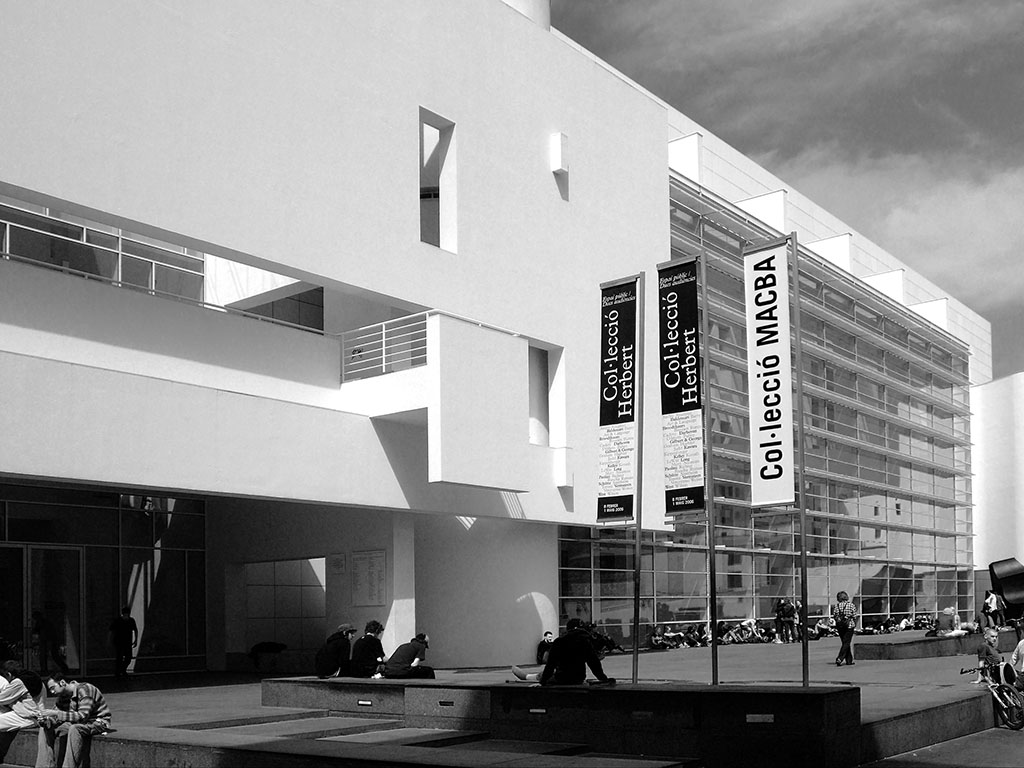
Meier won the prestigious Pritzker Architecture Prize in 1984. Among his most recognizable projects are the Barcelona Museum of Contemporary Art and the Getty Center in Los Angeles. Other important commissions include civic buildings, museums, and private houses that demonstrate his consistent vocabulary of light, white surfaces and geometric clarity.
Selected projects
- Barcelona Museum of Contemporary Art — a regional landmark that introduced Meier's language to an international audience.
- Getty Center, Los Angeles — a complex of museum, research and public spaces arranged across terraces and plazas.
- Residential work — early modern houses that explored transparency, planes and minimal detailing.
Legacy and later developments
Meier's work has been influential for architects seeking rigorous formal order and luminous interiors. His consistent use of white and modular systems offers a clear counterpoint to more expressionistic trends. In the late 2010s his reputation was affected by allegations of inappropriate behavior; following inquiries he stepped back from daily leadership at his firm. Despite the controversy, his buildings remain widely studied for their compositional clarity and handling of light.
Why Meier matters
Meier's projects combine public visibility with a disciplined modernist ethos. They illustrate how a consistent formal language can be adapted to museums, civic buildings and private dwellings, and they continue to provoke debate about form, materiality and the social responsibilities of architects.
Author
AlegsaOnline.com Richard Meier: American Modernist Architect and Abstract Artist Leandro Alegsa
URL: https://en.alegsaonline.com/art/129528