
Ray Crawford (footballer)
Ray Crawford (born 13 July 1936) is an English former professional footballer, a prolific forward best known for his goalscoring with Ipswich Town and other English clubs in the 1950s–60s.
Raymond "Ray" Crawford (born 13 July 1936 in Portsmouth) is a retired English professional association footballer. He played as a forward during the 1950s and 1960s and earned a reputation for scoring ability and intelligent movement in the penalty area. His birthplace and early life were rooted in Portsmouth, a city with a long footballing tradition; more on that background can be found via local histories Portsmouth.
Image gallery
2 Images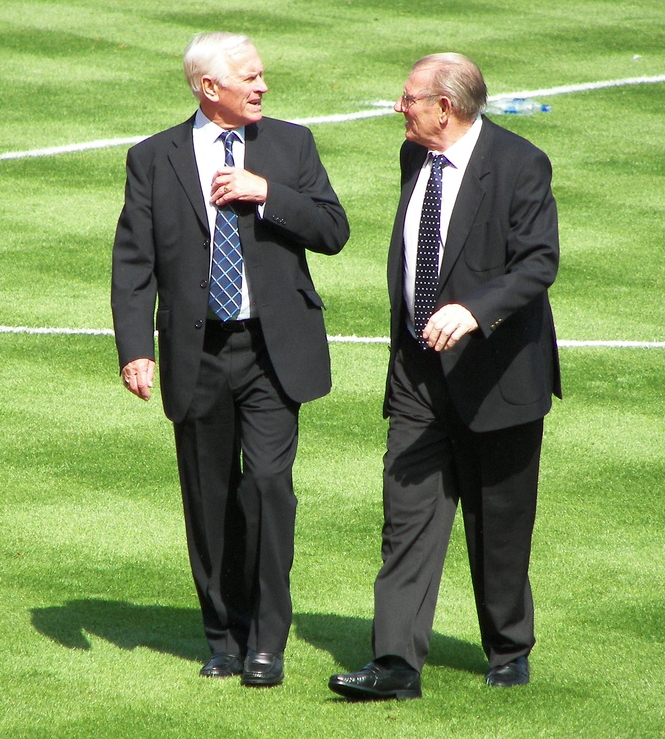

Career overview
Crawford's professional career saw him represent several English clubs, most notably Ipswich Town. He was a key member of the Ipswich side managed by Alf Ramsey as the club rose into the top tier of English football and achieved national success in the early 1960s. Over his career he lined up as a central striker whose main contribution was consistent goal scoring for club teams across the Football League.
Playing style and characteristics
As a centre forward, Crawford was widely regarded for his finishing, positional sense and nose for goal. Contemporary descriptions emphasize his ability to get into scoring positions and convert chances, traits that defined many successful forwards of his generation. Observers often contrast his forward play with other archetypes of the era, noting a practical, results-focused approach rather than flamboyant dribbling.
Notable achievements and legacy
Ray Crawford is remembered as one of the more prolific English forwards of his era and is associated particularly with Ipswich Town's rise under Alf Ramsey. His role in the club's historic period helped secure his place in supporters' memories, and he is frequently mentioned in retrospectives about postwar English club football. For context on the sport he played, see general material about English football and the tradition of the association footballer.
Clubs and honours
- Played for multiple English league clubs, including a notable spell at Ipswich Town.
- Part of Ipswich Town squads that achieved promotion and domestic success in the early 1960s under Alf Ramsey.
- Retained a reputation among supporters and historians as an effective goalscorer of his generation.
After retiring from playing, Crawford remained a figure of interest for fans and historians studying the period. His career illustrates the role of the centre forward in mid-20th-century English football and the way individual goalscorers could shape a club's fortunes during a transformative era for the game.
Author
AlegsaOnline.com Ray Crawford (footballer) Leandro Alegsa
URL: https://en.alegsaonline.com/art/129304