
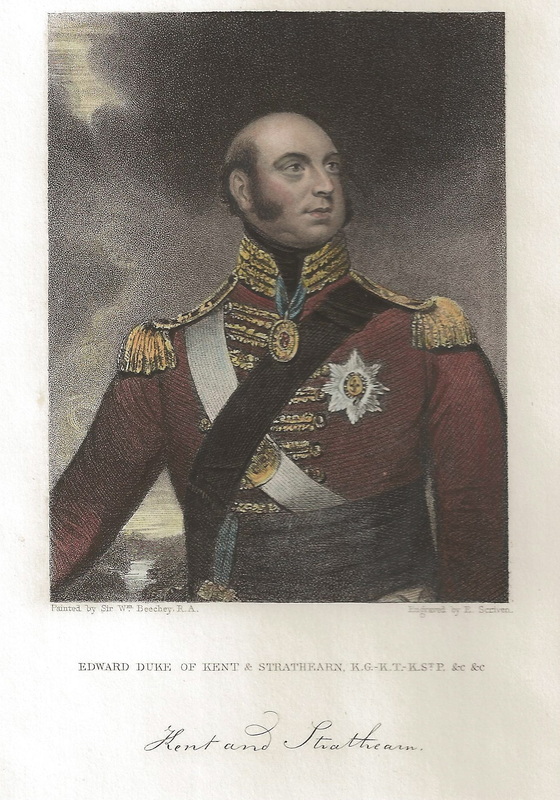
Prince Edward, Duke of Kent and Strathearn
British prince and army officer, fourth son of King George III, father of Queen Victoria; known for his military career, short marriage to Princess Victoria of Saxe-Coburg, and role in the royal succession.
Overview
Prince Edward Augustus, Duke of Kent and Strathearn (1767–1820) was a British royal and career army officer who became notable as the fourth son of King George III and the father of Queen Victoria. His life combined active military service, a late dynastic marriage, and a brief period as the progenitor of a new direct line of succession when his only child ascended the throne.
Image gallery
10 Images





Early life and military career
Born into the Georgian royal family, Edward entered the British Army as was customary for younger sons of the monarch. He spent many years on military service and held a number of postings and commands overseas during the late 18th and early 19th centuries. Known among contemporaries for steady professionalism rather than flamboyance, his public reputation rested on his uniformed service rather than extensive political influence at court.
Marriage and family
In 1818 Edward married Princess Victoria of Saxe-Coburg-Saalfeld, a union arranged with dynastic and domestic considerations in mind. The couple had a single child, Alexandrina Victoria, born in May 1819. That infant later became Queen Victoria, whose long reign reshaped the British monarchy and gave lasting historical prominence to her father’s short chapter in royal genealogy.
Death and legacy
Prince Edward died in early 1820 when his daughter was only a few months old. He did not live to see Victoria’s accession in 1837, but his marriage and paternity were decisive for the succession. His death left the infant princess to be raised under the care of her mother and advisers, a situation that influenced court politics and the upbringing known later as the Kensington System.
Titles, residences and notable facts
- Style and title: best known by the dukedom Duke of Kent and Strathearn.
- Role: career army officer with long service and several overseas postings.
- Family impact: father of Queen Victoria, linking the future monarch directly to George III’s line.
Though his life was relatively short and his public achievements modest, Prince Edward’s principal historical significance rests in his place in the royal succession and as the father of one of Britain’s most consequential monarchs.
Author
AlegsaOnline.com Prince Edward, Duke of Kent and Strathearn Leandro Alegsa
URL: https://en.alegsaonline.com/art/129009