
Pierre Pflimlin: French Christian Democrat and European Statesman
Biography and significance of Pierre Pflimlin (1907–2000), a French Christian-democratic leader, brief prime minister in 1958, longtime Alsatian mayor, and advocate of European integration.
Pierre Pflimlin (1907–2000) was a French Christian-democratic politician active in the mid-20th century. Known for his commitment to European integration and Franco‑German reconciliation, he served briefly as Prime Minister of France during the 1958 crisis of the Fourth Republic and later held prominent roles in local and European institutions.
Image gallery
2 Images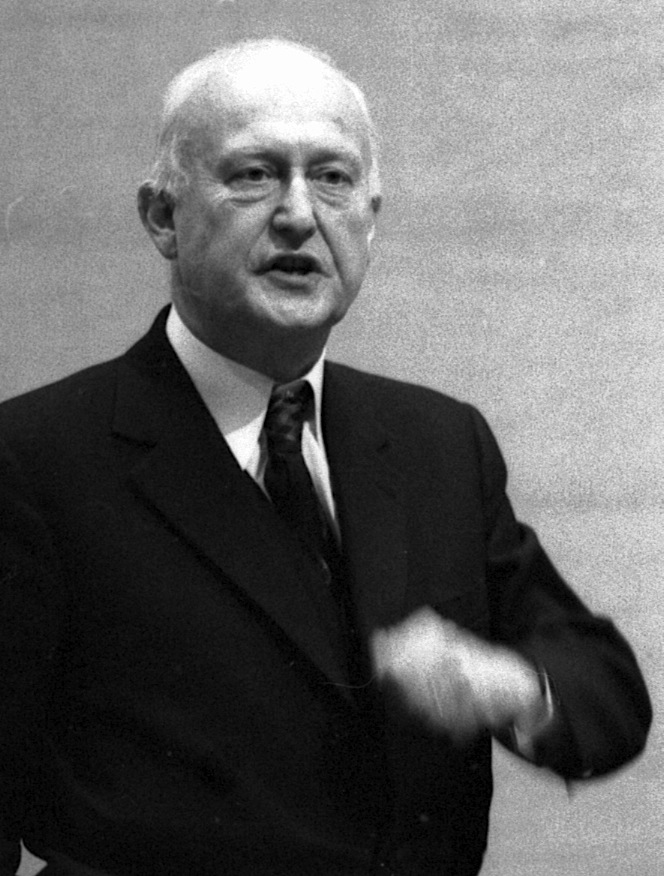

Early life and political identity
Born in Alsace, Pflimlin's political identity was shaped by the border region's history and Catholic social thought. He was associated with the postwar Christian‑democratic movement and became a public figure who combined centrist, pro‑European ideals with a pragmatic approach to domestic governance. His Alsatian background made him a visible advocate for closer ties between France and Germany.
National career and the 1958 crisis
During the instability of the Fourth Republic Pflimlin held several ministerial responsibilities and emerged as a consensual figure within the centrist Mouvement Républicain Populaire. In 1958, at the height of the Algerian War and a political breakdown in Paris, he was appointed prime minister to try to form a government capable of restoring order. His time in office was short: the scale of the crisis and a political turn toward a strong executive led to the return of Charles de Gaulle and the end of the Fourth Republic.
Local leadership and European engagement
After national events, Pflimlin focused much of his career on local government and European institutions. He served for many years as mayor of Strasbourg, where he promoted reconciliation, cross‑border cooperation and the European project. In the later decades of his life he took on leadership roles at the European level, reflecting his long-standing commitment to deeper continental integration.
Legacy and significance
Pflimlin is remembered for bridging local and international politics: an Alsatian statesman who advocated democratic stability, social moderation and European unity. His brief premiership is often seen as a symbol of the Fourth Republic's fragility, while his later work illustrated the postwar generation's shift toward supranational cooperation.
Notable facts
- He represented the Christian‑democratic political tradition in postwar France and worked to reconcile regional identity with national policy.
- His appointment as prime minister in 1958 precipitated a rapid political realignment that brought Charles de Gaulle back to power.
- As a long-serving mayor and European official, his practical efforts reinforced Franco‑German rapprochement and European institutions.
Pierre Pflimlin died in 2000. His career illustrates both the instability of mid‑century French politics and the postwar turn toward European cooperation that shaped the later 20th century.
Author
AlegsaOnline.com Pierre Pflimlin: French Christian Democrat and European Statesman Leandro Alegsa
URL: https://en.alegsaonline.com/art/128770