
Pedro Pires
Cape Verdean statesman Pedro Pires (born 1934) led his country as its first prime minister after independence and later served two terms as president, playing a central role in its political transition.
Pedro de Verona Rodrigues Pires (born 29 April 1934) is a Cape Verdean politician who was a key figure in his country’s post‑colonial history. He served as the first Prime Minister of independent Cape Verde from 1975 to 1991 and later as President from 2001 to 2011. His career spans the era of one‑party rule, the introduction of multiparty democracy and a period of political consolidation and international engagement for Cape Verde.
Image gallery
2 Images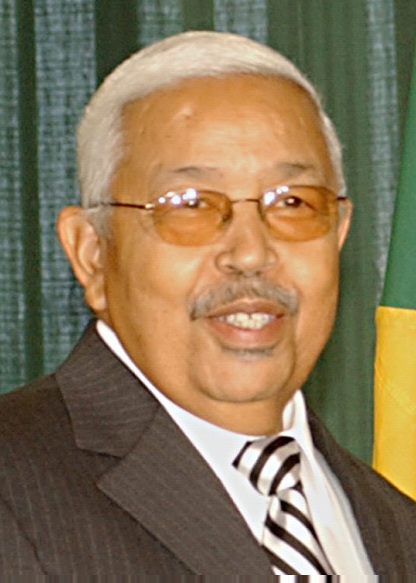

Early life and political beginnings
Pires was born in 1934 in the then Portuguese colony and emerged as a prominent activist in the independence movement. He became associated with the party that led the anti‑colonial struggle and, after independence in 1975, helped build the institutions of the new state. His political identity is closely tied to the African Party for the Independence of Cape Verde (PAICV), the dominant formation during the first decades of sovereignty.
Prime ministership (1975–1991)
As Prime Minister, Pires oversaw the first phase of national administration, when the government faced the twin tasks of nation building and economic development in a small island state with limited resources. His government implemented central planning policies typical of newly independent African states of the period and maintained close ties with other Lusophone countries and international partners.
Return to the presidency (2001–2011)
After a decade outside executive office following the introduction of competitive elections in the early 1990s, Pires returned to political prominence by winning the 2001 presidential election, defeating a leading opposition figure in a runoff. He was re‑elected in 2006 and served two full terms, during which he was widely seen as a stabilizing presence who supported democratic institutions, rule of law and international cooperation.
Legacy and significance
Pires is remembered for his long involvement in Cape Verdean politics and for presiding at moments of transition: from colonial rule to independence, and from single‑party governance to multiparty democracy. Under leaders such as Pires, Cape Verde developed a reputation for political stability, respect for civil liberties and steady ties with the diaspora and international partners. His career illustrates the challenges and continuities faced by small island states in the late 20th and early 21st centuries.
- Key roles: independence-era leader, long-serving prime minister, two‑term president.
- Political affiliation: African Party for the Independence of Cape Verde (PAICV).
- Notable themes: state building, democratic transition, international engagement.
Author
AlegsaOnline.com Pedro Pires Leandro Alegsa
URL: https://en.alegsaonline.com/art/128398