
Maria Luisa of Spain (1745–1792), Holy Roman Empress
Spanish Bourbon princess who became Grand Duchess of Tuscany and Holy Roman Empress as the wife of Leopold II; mother of Francis II and a link between Bourbon Spain and the Habsburg court.
Maria Luisa of Spain (24 November 1745 – 15 May 1792) was a Spanish Bourbon princess who became Grand Duchess of Tuscany and later Holy Roman Empress as the consort of Emperor Leopold II. Born into the royal family of Spain, she is remembered chiefly for her role as a dynastic bride who linked the Bourbon and Habsburg houses during a period of political realignment in late 18th-century Europe.
Image gallery
7 Images
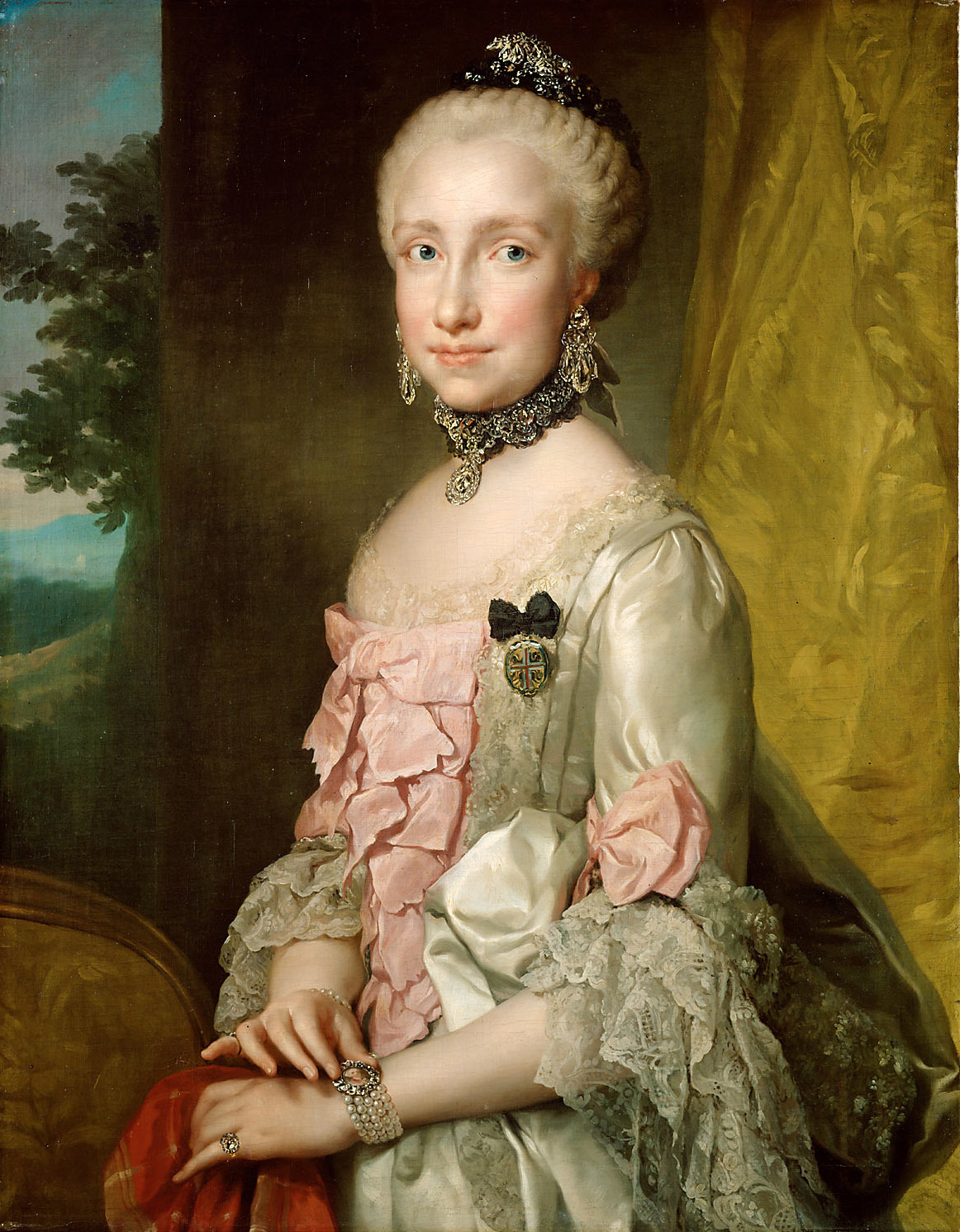


Background and family
Maria Luisa was the daughter of Charles III of Spain and his wife Maria Amalia of Saxony, members of the Bourbon and Wettin dynasties respectively. Raised in the Spanish court, she belonged to a generation of princesses whose marriages were arranged to secure alliances and reinforce dynastic ties across the major Catholic monarchies of Europe.
Marriage and public role
In the 1760s she married Archduke Leopold of Austria. As his wife she served first as Grand Duchess of Tuscany while Leopold governed that Italian state, and then as Holy Roman Empress and Queen of the Germans, Bohemia and Hungary when Leopold succeeded his brother on the imperial throne in 1790. Her public position was that of a consort: she performed ceremonial duties, represented the house of Habsburg-Lorraine at court, and participated in the social and dynastic life of the monarchy.
Children and dynastic importance
Maria Luisa was the mother of several children who went on to occupy important thrones. Most notably, her eldest surviving son became Francis II, the last Holy Roman Emperor and first Emperor of Austria. Another son, Ferdinand, became Grand Duke of Tuscany. Through her offspring she helped shape the dynastic map of Europe on the eve of the Napoleonic era.
Personality, patronage and legacy
Contemporary accounts present her as a traditional, devout consort devoted to family and court duties. Like many consorts of her rank she acted as a cultural patron in modest ways, supporting court ceremonies, charitable projects and the social institutions tied to the Habsburg household. Her legacy rests mainly in the dynastic connections she forged and in the role her children played during the turbulent closing decades of the 18th century.
Notable facts
- She bridged the Bourbon dynasty of Spain and the Habsburg-Lorraine dynasty through marriage.
- Her husband, Leopold, became Holy Roman Emperor in 1790; she held the title of Empress until her death in 1792.
- Her descendants included rulers who faced the challenges of the French Revolutionary and Napoleonic periods.
Maria Luisa's life illustrates the centrality of dynastic marriage in 18th-century European politics: while not usually a political actor in her own right, a consort's family ties, children and public presence could have lasting geopolitical consequences.
Author
AlegsaOnline.com Maria Luisa of Spain (1745–1792), Holy Roman Empress Leandro Alegsa
URL: https://en.alegsaonline.com/art/125986