
Blue Mountains (New South Wales) — landscape, ecology and significance
A rugged sandstone region west of Sydney in New South Wales, Australia. Known for eucalyptus forests, deep gorges, the Three Sisters and the Greater Blue Mountains World Heritage Area.
Overview
The Blue Mountains are a broad upland region in New South Wales, Australia, beginning just west of the Sydney basin and extending across a sandstone plateau towards the Coxs River. The foothills lie roughly 50 kilometres west of central Sydney, and the area is bounded by major waterways such as the Nepean River. Much of the region is included within the Greater Blue Mountains World Heritage Area, recognised for its natural values.
Image gallery
10 Images




Landscape and geology
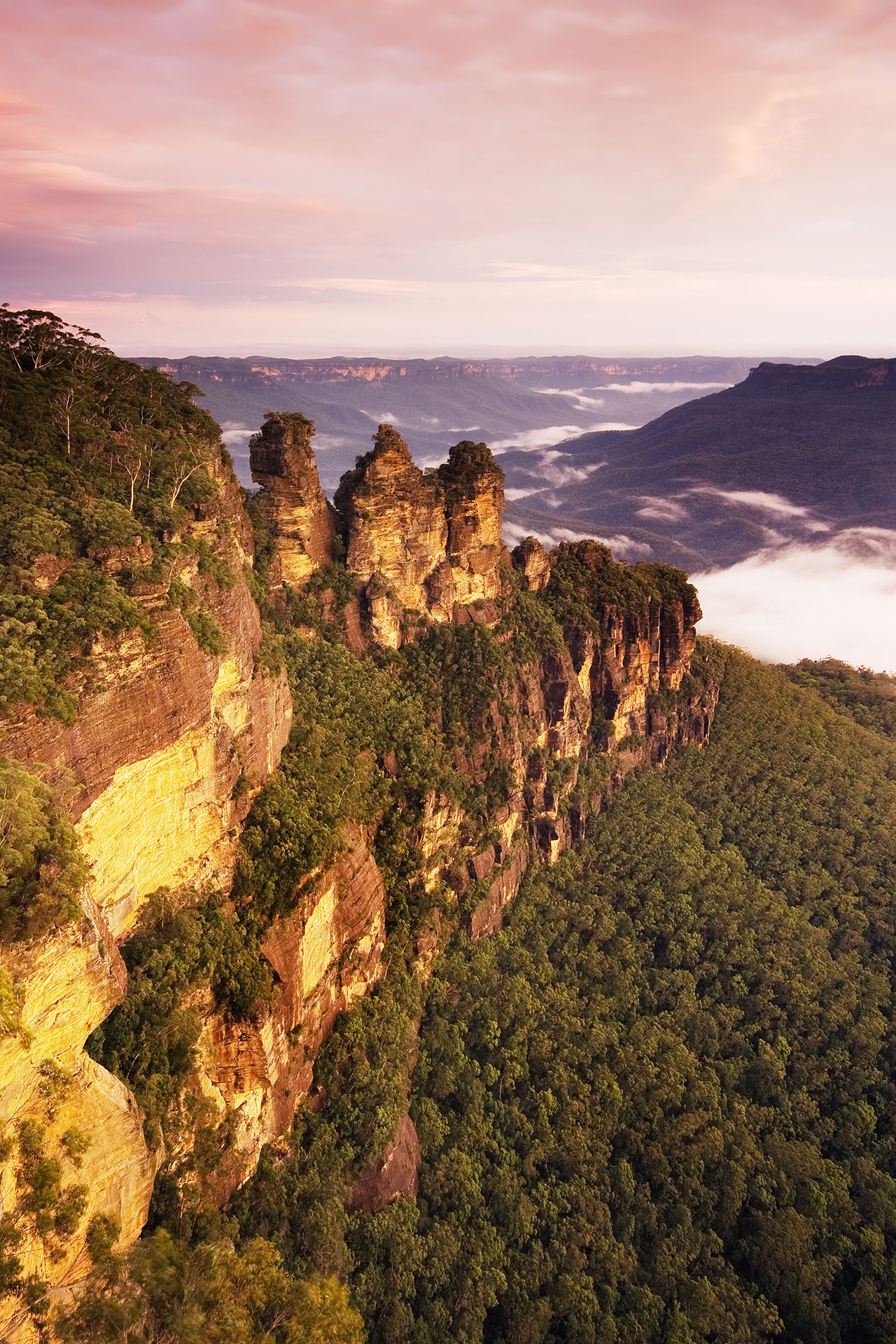
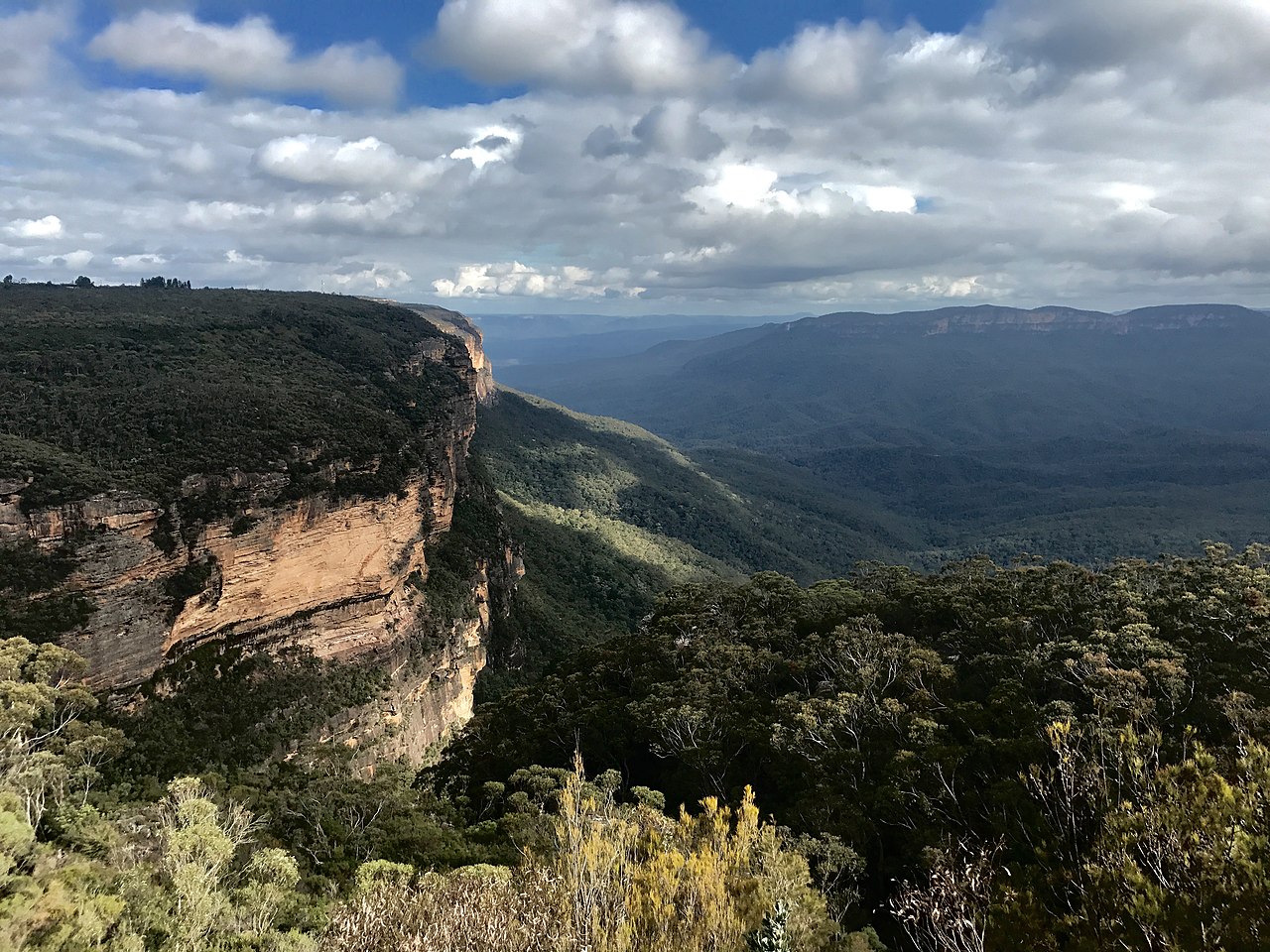
The Blue Mountains are formed largely from Permian and Triassic sandstones that have been uplifted and deeply dissected by erosion. The resulting terrain features dramatic escarpments, cliff lines, plateaus and extensive valleys such as the Jamison and Megalong. The characteristic blue appearance of distant ridges is caused by sunlight interacting with fine droplets of oil released by eucalyptus trees.
Vegetation and wildlife
Vegetation is dominated by open eucalyptus forests with pockets of temperate rainforest in sheltered gullies. This mosaic supports a wide range of fauna: possums, gliders, lyrebirds and many bird species, as well as reptiles and invertebrates. The discovery of the rare Wollemi pine in the late 20th century highlighted the region's botanical significance and led to intensive conservation measures.
Human history and cultural values
The Blue Mountains lie on the traditional lands of Indigenous peoples including the Gundungurra and Darug, whose cultural connections and songlines link to the landscape. European explorers crossing the mountains in the early 19th century opened the area to settlement and development. Towns such as Katoomba and Leura grew as service centres and as destinations for visitors seeking scenery and cooler climates.
Recreation, conservation and attractions
The region is a major recreational resource: bushwalking, canyoning, climbing and scenic lookouts attract millions of visitors annually. Notable features and visitor sites include:
- The Three Sisters rock formation and Echo Point lookout
- Extensive walking tracks across valleys and cliff-tops
- Protected national parks and interpretive centres focused on natural and cultural heritage
Importance and challenges
As a World Heritage-listed area, the Blue Mountains are valued for biodiversity, geology and cultural heritage. Ongoing challenges include managing bushfire impacts, invasive species, and balancing visitor access with protection of fragile ecosystems. Conservation programs, research and careful land management aim to retain the region's ecological integrity while allowing people to experience its unique landscapes.
Related articles
Author
AlegsaOnline.com Blue Mountains (New South Wales) — landscape, ecology and significance Leandro Alegsa
URL: https://en.alegsaonline.com/art/12360
Sources
- gnb.nsw.gov.au : "Mount Piddington"
- businesseventssydney.com.au : "Beyond the city"
- whc.unesco.org : Greater Blue Mountains Area · webcitation.org
- doi.org : online Abstract