
Ivan Sutherland — Pioneer of Computer Graphics and Interactive Systems
Ivan Sutherland (born 1938), called the 'father of computer graphics', created Sketchpad and early virtual-reality devices; his work shaped GUIs, CAD, and modern interactive graphics.
Ivan Edward Sutherland (born May 16, 1938) is an American computer scientist widely regarded as a founder of modern computer graphics. His doctoral research produced Sketchpad, an interactive drawing program that demonstrated that computers could be used for graphical manipulation, geometric constraint solving, and direct man–machine interaction. Over decades his inventions and teaching influenced graphical user interfaces, computer-aided design, virtual reality, and real-time rendering.
Image gallery
1 Image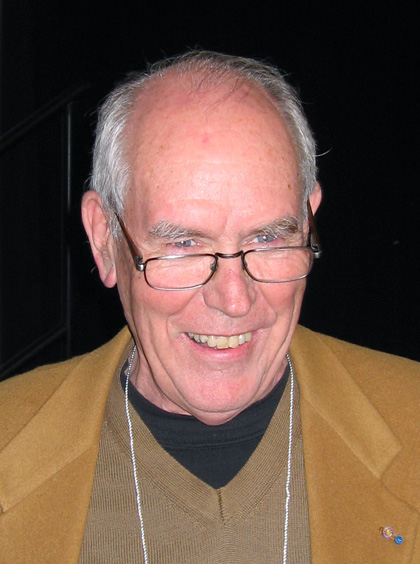
Early work and Sketchpad
Sketchpad, completed as Sutherland’s MIT doctoral thesis in the early 1960s, introduced several innovations that anticipated later graphical systems. It allowed users to draw and edit shapes directly on a screen, used a light pen for input, supported hierarchical object definitions, and managed geometric constraints. These capabilities embodied the idea that visual objects could be treated as first-class program data and that interactive manipulation could replace batch-style computing for many design tasks.
Key characteristics of Sketchpad
- Direct graphical input and visual feedback rather than typed commands.
- Hierarchical organization of drawings, enabling reuse and modularity.
- Constraint-based manipulation that kept relationships between parts consistent.
- Early example of a graphical user interface and a precursor to CAD systems.
Sketchpad’s concepts—interactive editing, on-screen objects, and constraints—became core ideas in a broad range of technologies, from GUI toolkits to engineering design software.
Later career and influence
After Sketchpad, Sutherland continued to explore interactive computing and display systems. He co-founded the graphics company Evans & Sutherland, helped develop one of the first head-mounted display prototypes (sometimes called the "Sword of Damocles"), and guided research groups that trained many leading figures in computer graphics and visualization. His work laid foundations for virtual reality research and influenced how graphical systems are designed for both engineering and entertainment.
Honors, recognition, and legacy
Sutherland’s contributions have been widely honored: he received the Turing Award in 1988 for Sketchpad and its impact (Turing Award citation), and in 2012 he was awarded the Kyoto Prize in Advanced Technology for pioneering achievements in computer graphics and interactive interfaces. He is a member of the National Academy of Engineering (NAE membership) and the National Academy of Sciences, and is often cited as the "father of computer graphics". General biographical and career summaries are available via standard references on notable computer scientists (biographical overview).
Today Sutherland’s early insights about interactivity, visual representation, and human-centered input devices continue to inform research and product design. Sketchpad’s emphasis on manipulating graphical objects rather than lines of code remains a central principle of contemporary design tools, making his work a cornerstone in the history of computing.
Related articles
Author
AlegsaOnline.com Ivan Sutherland — Pioneer of Computer Graphics and Interactive Systems Leandro Alegsa
URL: https://en.alegsaonline.com/art/121036
Sources
- books.google.com : Encyclopedia of World Scientists
- invent.org : "Ivan E. Sutherland Display Windowing by Clipping Patent No. 3,639,736" · archive.is
- kyotoprize.org : kyotoprize.org