
George Chambers (Prime Minister of Trinidad and Tobago)
George Chambers (1928–1997) was a long-serving politician of the People's National Movement who served as the second Prime Minister of Trinidad and Tobago from 1981 to 1986.
George Michael Chambers ORTT (4 October 1928 – 4 November 1997) was a Trinidadian politician who served as the second Prime Minister of Trinidad and Tobago. A senior figure in the People's National Movement (PNM), Chambers was part of the governing team that led the country through the post-independence decades and succeeded the founding leader of the state in national office.
Image gallery
1 Image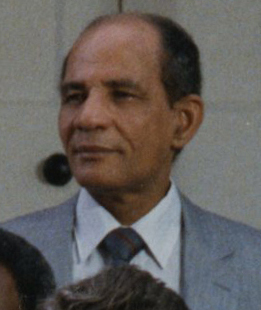
Early career and ministerial roles
Chambers rose through party ranks, serving as Assistant General Secretary of the PNM before entering government service. He was appointed Parliamentary Secretary in the Ministry of Finance in 1966 and, over the following years, held a number of key cabinet posts. His ministerial responsibilities included finance, public utilities, housing, national security, education, planning, industry and agriculture. These varied portfolios reflected his role as a senior administrator in a party-dominated political system.
Premiership and national context
He became Prime Minister in 1981 following the death of the nation’s first prime minister. Chambers led the government during a difficult period marked by economic strain, shifting energy markets and growing public concern about unemployment and crime. His administration pursued policies aimed at social stability and continuation of public services while attempting to respond to declining revenues from the energy sector that had been a major source of export earnings.
Policies, challenges and 1986 election
Chambers emphasized social programs and state-led development that had characterized the PNM's approach since independence. Facing external shocks to the economy and rising domestic discontent, his government struggled to maintain growth and employment. In the 1986 national election the PNM lost power to a broad opposition coalition, and Chambers stepped down as head of government.
Later life and legacy
After leaving office, Chambers remained a prominent elder statesman within Trinidad and Tobago’s political history until his death in 1997. He is remembered for his long service in multiple government roles, his stewardship during a turbulent economic period, and for being the transitional figure who followed the country’s first prime minister. Histories of post‑independence Trinidad and Tobago commonly place his premiership in the context of the state’s adjustment to changing international energy markets and the political realignments of the 1980s.
Notable facts
- Second Prime Minister of the Republic of Trinidad and Tobago.
- Longtime member and official of the People's National Movement.
- Served in many major ministries, including finance and national security.
Related articles
Author
AlegsaOnline.com George Chambers (Prime Minister of Trinidad and Tobago) Leandro Alegsa
URL: https://en.alegsaonline.com/art/119564
Sources
- independent.co.uk : Anthony Payne, "Obituary: George Chambers"