
Fabio Cannavaro — Italian defender and captain of Italy's 2006 World Cup team
Italian central defender Fabio Cannavaro (born 1973) captained Italy to the 2006 FIFA World Cup, won top individual honours that year, and is widely regarded as one of the game's greatest defenders.
Overview
Fabio Cannavaro, born 13 September 1973, is a retired Italian professional football player who achieved global recognition as a central defender. He captained the Italy squad that won the FIFA World Cup in 2006 and received major individual awards that year, including the Ballon d'Or. Cannavaro is frequently cited among the finest defenders in modern football.
Image gallery
9 Images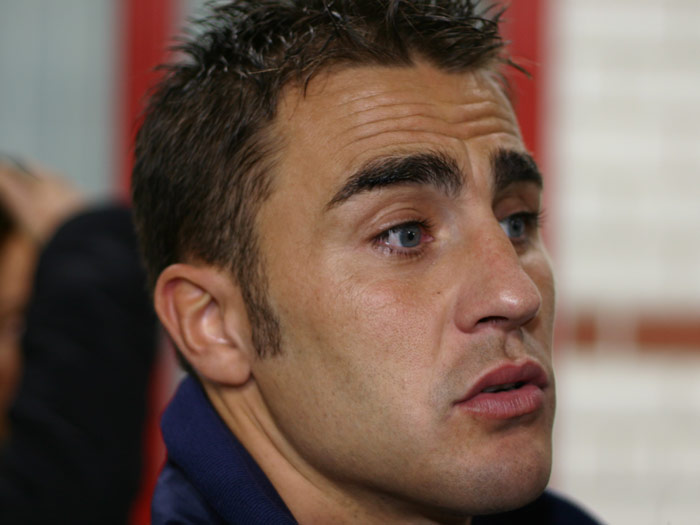



Playing profile and characteristics
Cannavaro combined tactical intelligence, timing and leadership rather than relying on exceptional height or raw pace. He was admired for his positional sense, ability to read the opponent's play, strong tackling and aerial competence. Teammates and coaches highlighted his organizational skills and calmness under pressure, qualities that allowed him to marshal defensive lines at both club and international level.
Club career
Across a long professional career he featured for several prominent Italian clubs and a leading Spanish side. His club journey included spells at:
- Napoli — the city and club where he began his professional path.
- Parma — where he established himself and won the UEFA Cup in 1999.
- Internazionale Milano and Juventus — important stops in Italy's top division.
- Real Madrid — a high-profile move to Spain following his World Cup success.
With these clubs he collected domestic trophies and continental honours, while being recognised for consistency and leadership at the back.
International career and 2006 World Cup
Cannavaro was a mainstay of the Italy national team for many years and earned well over 100 caps. His leadership peaked at the 2006 FIFA World Cup, where as captain he guided Italy to the title. That campaign is often cited as the high point of his international career and contributed heavily to his individual accolades.
Legacy, comparisons and later roles
Observers have compared Cannavaro to historic defensive greats for his combination of technique, reading of the game and influence — some commentators have drawn parallels with figures such as Franz Beckenbauer when discussing defensive leadership. After retiring from playing, Cannavaro moved into coaching and management, including roles outside Italy, reflecting a continued involvement in the sport.
Notable facts
Aside from his World Cup triumph and individual honours, Cannavaro is remembered for proving that a centre-back can be the central figure in a team's success without relying solely on physical dominance. His career is used in coaching and tactical discussions as an example of defensive intelligence and leadership. For more detailed career timelines and statistics, see dedicated profiles and archives linked below.
Further resources: Biography, playing career overview, World Cup record, 2006 tournament, Parma history, Napoli background, Inter Milan profile, Serie A context, Italy national team, defensive comparisons.
Related articles
Author
AlegsaOnline.com Fabio Cannavaro — Italian defender and captain of Italy's 2006 World Cup team Leandro Alegsa
URL: https://en.alegsaonline.com/art/118812
Sources
- eurosport.com : eurosport.com/football/fabio-cannavaro_prs317/person.shtml
- rsssf.com : "Fabio Cannavaro - Century of International Appearances"